This reference architecture describes how to build durable AI workflows on MongoDB Atlas with Temporal for event-driven ingestion, semantic retrieval, and agentic execution.
It supports teams that need retrieval-augmented generation (RAG) and multi-step AI workflows to continue reliably across failures, retries, and long-running operations.
The architecture supports two ingestion patterns. In the event-stream pattern, source updates flow through Kafka and Atlas Stream Processing before invoking Temporal. In the direct pattern, source updates trigger Temporal workflows immediately. In both cases, MongoDB Atlas stores operational data, semantic knowledge, and application state, while Temporal coordinates extraction, chunking, embedding, indexing, and retrieval operations.
Solution 1: Ingest through Kafka and Atlas Stream Processing
This pattern suits environments that already use Kafka for event transport, change propagation, or decoupled system integration. Kafka provides a standard ingress layer for high-volume or varied source updates, while Atlas Stream Processing transforms and routes events before invoking Temporal. This separation matters when ingestion must scale independently from workflow execution, or when teams want a common event backbone across multiple downstream consumers in addition to the AI pipeline. Content updates originate from diverse platforms such as S3, APIs, or a database or messaging system.
Diagram
The following diagram shows this flow.
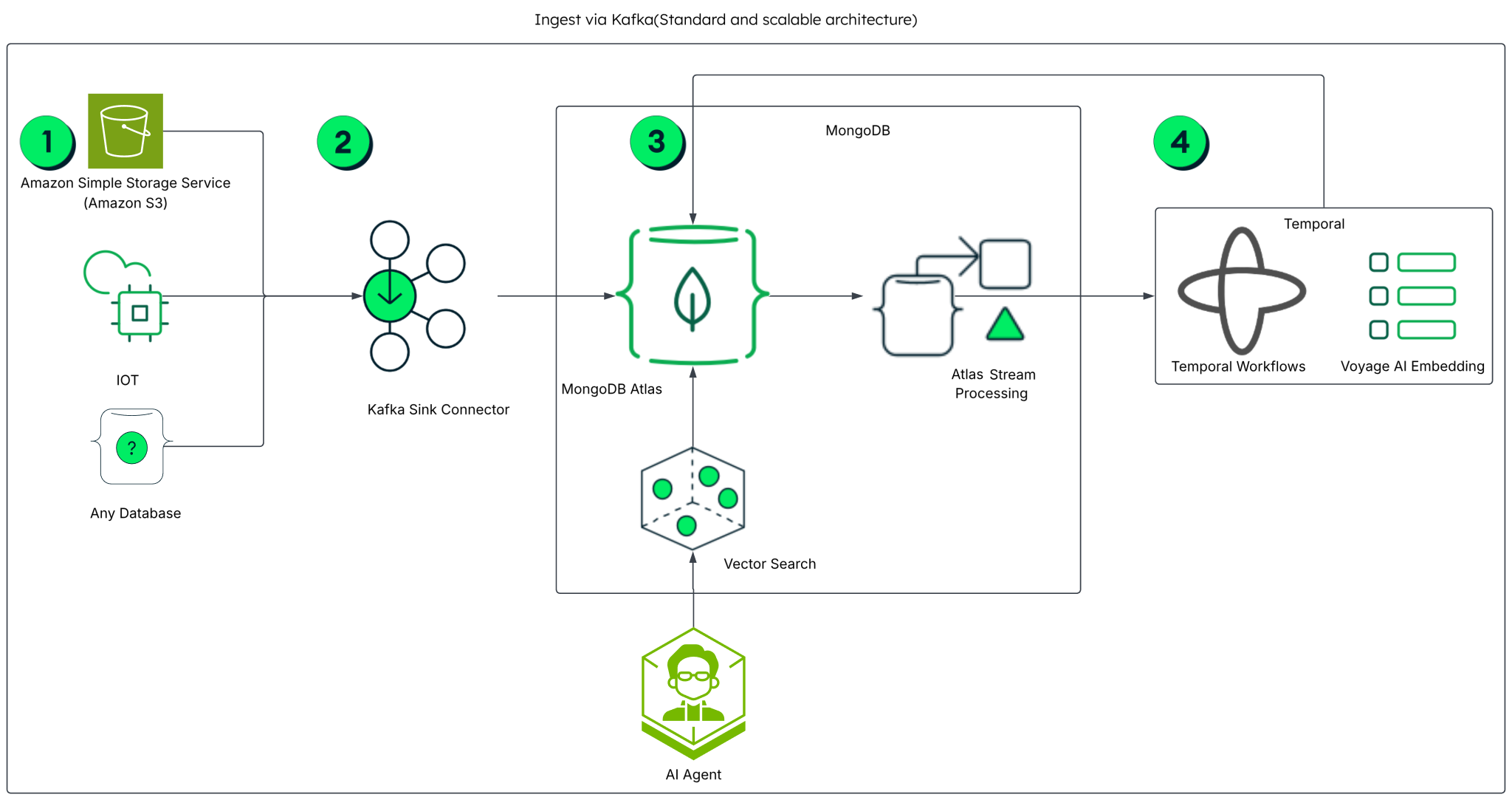
Figure 1. Ingest through Kafka and Atlas Stream Processing
Data Flow
The following steps describe this flow:
Source systems produce or expose content
Content originates from upstream systems such as Amazon S3, IoT platforms, and operational databases. These systems provide the raw documents, records, or events that the pipeline processes. When new or updated content becomes available, the source system emits an event to the Kafka Sink Connector, which writes it to the MongoDB
sourcescollection.Kafka Sink Connector
The Kafka Sink Connector is the durable message handoff between the streaming layer and MongoDB. It consumes events from Kafka topics and writes them into MongoDB Atlas as documents. This component provides two things the direct trigger does not: it fans in multiple, varied sources into one ordered stream, and it buffers against back-pressure.
MongoDB (Atlas, Stream Processing, and Vector Search)
MongoDB plays a dual role in this architecture, appearing at two different points in the flow.
MongoDB Atlas is the landing zone for Kafka Sink Connector events. Raw source documents that the Sink Connector writes sit in Atlas as the staging record of what arrived from the outside world.
Atlas Stream Processing acts as the trigger between that landing zone and Temporal. It watches the incoming documents through change streams and starts the downstream workflow. This turns MongoDB from a passive store into an active event source, removing the need for a polling loop and making the handoff to Temporal event-driven rather than scheduled.
Atlas Vector Search serves the read path for the agent, running semantic similarity search as a native aggregation pipeline stage, with no separate vector database and no cross-system query fan-out.
MongoDB appears on both sides of the data flow: it receives raw events and serves the final embedded vectors. Atlas Stream Processing connects the two.
Temporal and Voyage AI embedding
Atlas Stream Processing invokes Temporal, rather than Temporal receiving the event directly. The processing core is the same as in Solution 2: Temporal workflows provide durable, resumable orchestration, and Voyage AI embedding runs as independently retryable activities within those workflows.
In this solution, Temporal consumes MongoDB events rather than receiving source events directly. It only ever receives a clean, normalized trigger from Atlas Stream Processing, regardless of whether that trigger originated from S3, IoT, or a database. This stage is bidirectional: Temporal writes the embedded, indexed chunks back into the MongoDB knowledge collection once processing completes.
Solution 2: Ingest Data Sources Directly into Temporal
This pattern suits systems that can emit reliable object, API, or application events directly into a workflow trigger. It reduces architectural layers and keeps the ingestion path straightforward, while still preserving resumability for long-running extraction and embedding steps. Because the workflow is triggered with a source reference rather than raw content, the downstream pipeline stays source-agnostic and can support additional upstream systems with minimal orchestration changes.
Diagram
The following diagram shows this flow.
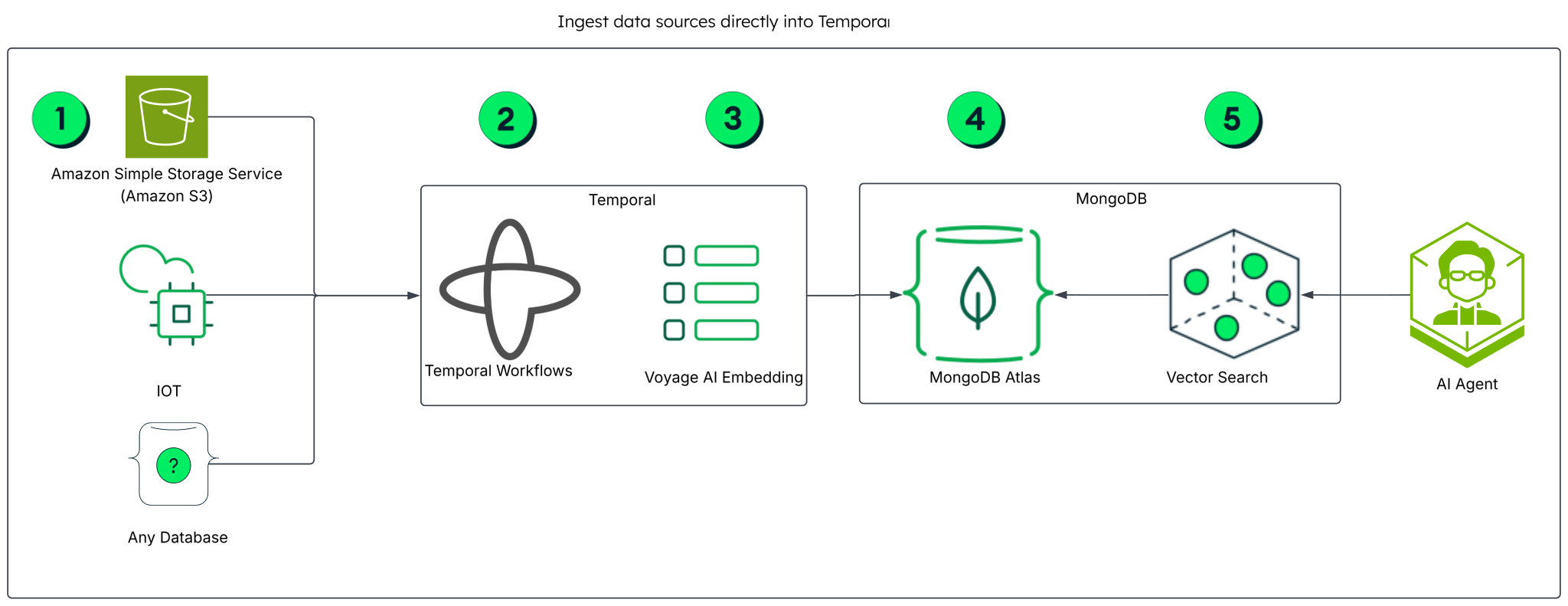
Figure 2. Ingest Data Sources Directly into Temporal
Data Flow
The following steps describe this flow:
Source systems produce or expose content
Content originates from upstream systems such as Amazon S3, IoT platforms, and operational databases. These systems provide the raw documents, records, or events that the pipeline processes. When new or updated content becomes available, the source system emits an event to a lightweight adapter, such as AWS Lambda, a webhook, or a connector. The adapter starts the Temporal workflow and passes only the source reference and required metadata. This keeps source-specific logic outside the workflow, so you can add new source types without changing the downstream pipeline.
Temporal manages the ingestion lifecycle
After the workflow starts, Temporal coordinates execution, retries, and recovery across the ingestion steps. This makes the processing path durable, so long-running operations continue reliably across failures or restarts. The workflow retrieves the source content and converts it into a normalized form for downstream AI processing, creating a consistent representation across source types before semantic transformation begins.
Voyage AI generates embeddings inside the workflow
Voyage AI embedding runs as part of the workflow rather than as an external, fire-and-forget step. This keeps embedding observable and recoverable within the same execution path, and keeps the semantic transformation tightly coupled to the ingestion lifecycle.
MongoDB Atlas stores content, metadata, and embeddings
MongoDB Atlas persists the processed content, related metadata, and embedding vectors in a single platform. This creates a durable knowledge layer that supports both the ingestion write path and the downstream retrieval path.
Atlas Vector Search makes the knowledge retrievable
Atlas Vector Search indexes the embedded content so you can query it by semantic similarity. Because the embeddings and operational metadata remain in the same platform, later application and agent requests retrieve relevant context without a separate vector store or synchronization layer.
Agent Request Flow
This flow applies to both ingestion solutions. It uses the same durability principles as ingestion: instead of treating agent execution as a short-lived API request, the architecture runs retrieval and reasoning as workflow-driven operations that you can observe, retry, and resume. This matters when the agent performs multiple retrieval calls, invokes external tools, or needs to return progressive status updates before a final result.
Diagram
The following diagram shows the agent's components.
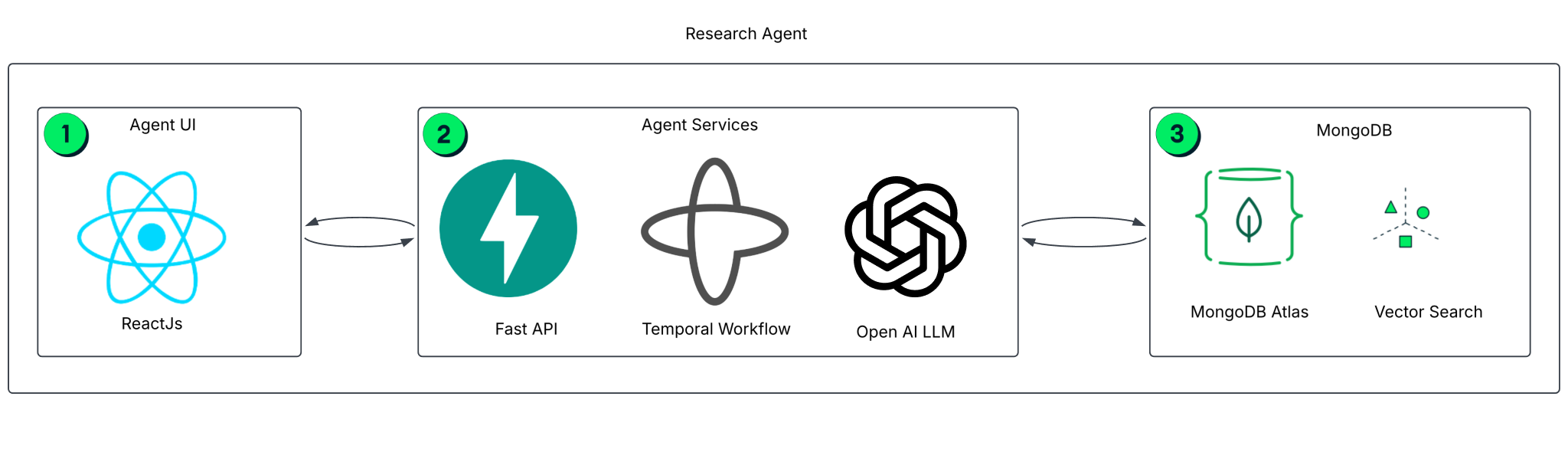
Figure 3. Research Agent Architecture
Data Flow
The following steps describe this flow:
Start an agent research request
When the agent API receives a user query through the UI, it starts a durable Temporal workflow. The system immediately returns a workflow identifier, so the UI can track progress as the research agent retrieves context and reasons about an answer.
Retrieve context from MongoDB Atlas Vector Search
MongoDB Atlas hosts the metadata, vector embeddings, and semantic indexes. During a user interaction, the agent embeds the query and uses MongoDB Atlas Vector Search to retrieve relevant context, often applying a reranking layer before final synthesis. For indexing and query patterns, see the Atlas Vector Search documentation.
Return a durable research result
The research workflow coordinates tool execution, model interactions, and final synthesis. Temporal maintains the process through retries and state persistence, so the UI delivers a validated answer. For more on durable execution, see the Temporal documentation.
Components
The following components implement this architecture.
MongoDB Atlas
Use MongoDB Atlas to store the ingestion pipeline's staged and embedded chunks, the MongoDB Atlas Vector Search index, and the agent's state in a single database. Because the agent reads the same data that the ingestion pipeline writes, there is no separate memory store to keep in sync.
Atlas Stream Processing
Use Atlas Stream Processing to provide an optional, event-driven integration path between streaming sources and Temporal workflows. It handles real-time transformation and routing of incoming events for high-throughput architectures. This lets you implement near-real-time ingestion without requiring Kafka if you choose a direct source-to-Temporal connection instead.
Voyage AI
Use Voyage AI to generate the embeddings and perform the result reranking for this architecture. Because embedding and reranking are separate from workflow orchestration, teams can upgrade the model independently of the ingestion and retrieval pipelines.
Atlas Vector Search
Use MongoDB Atlas Vector Search to retrieve document context and agent memory through semantic indexing. The research agent queries the same MongoDB Atlas cluster used for primary storage, so retrieval uses current operational data.
Temporal
Use Temporal as the durable execution layer for ingestion and agentic workflows across source systems, MongoDB Atlas, and external AI services. It coordinates long-running steps such as extraction, chunking, embedding, and indexing, and provides built-in retries, checkpointing, and recovery. This allows workflows to resume from their last successful state after a failure or interruption, instead of restarting. By making orchestration durable, Temporal helps teams reliably operate, backfill, and evolve production AI pipelines.
Exceptions, Caveats, and Tradeoffs
Consider the tradeoffs between direct and Kafka-based ingestion before you adopt this architecture. A direct source-to-Temporal connection has fewer moving parts to operate. A Kafka-based path adds a message broker, which introduces additional infrastructure but fits naturally if your organization already routes source updates through Kafka.
Implementation and Learn More
See the mdb-temporal-pra GitHub repository for deployment guidance and technical documentation.