行业: 制造
产品: MongoDB Atlas Search, MongoDB Atlas Vector Search, Hybrid Search in MongoDB Atlas
解决方案概述
The CMVR are the rules issued under India's Motor Vehicles Act. They set the technical and safety requirements a vehicle must meet before it can be manufactured, sold, or registered in the country. The AIS comprises the technical standards, developed and maintained by the ARAI. They specify how a vehicle or component must be tested to show it meets a given CMVR requirement. An OEM building a car for the Indian market uses these documents: the CMVR specifies what safety requirements the vehicle must satisfy, and the matching AIS establishes how that satisfaction gets tested and certified.
Regulatory and standards content is valuable only when people can find the right requirement at the right time. Consider an engineer at a component supplier finishing a headlamp assembly for an Indian OEM. Before the part goes to ARAI for certification, the engineer needs to confirm the current revision of AIS-xyz and check whether "rule abc" of the CMVR has been amended since the last submission. Searching a folder of gazette notifications and standards’ PDFs for that clause takes hours, and citing an outdated revision means a rejected certification and a delayed launch.
This solution walks through a MongoDB implementation for searching CMVR and AIS content, which:
Takes source material such as CMVR rule text, AIS standards, and their amendment notifications.
Turns this material into searchable records.
Retrieves the relevant document or section for a user query.
Returns the result context: the title, section or rule number, source, and document version.
The application uses MongoDB Search to match a query against the rule and section text, and returns the matching passage along with its source locator.
The same problem shows up anywhere a manufacturer sells into more than one market. A supplier shipping to Europe checks UNECE regulations, a supplier shipping to the United States checks FMVSS, and a supplier shipping to China checks the GB standards. Each regulatory body has its own amendment cycle, its own numbering, and its own effective dates. The pattern in this solution, preserving section, version, and source locator alongside searchable text, applies to these regulatory bodies.
This solution helps users locate and verify the source material that might answer a domain-specific question. At a high level, the solution uses the following workflow:
Ingest: Read CMVR rule text, AIS standards, and the gazette notifications or ARAI circulars that amend them.
Prepare: Normalize each source into a record that carries the document, section or rule number, amendment number, effective date, and locator metadata needed to trace a passage back to its origin.
Retrieve: Apply the MongoDB search path, filters, and ranking logic, respecting which amendment or revision is currently in force.
Present: Return the matched content along with its rule number, standard identifier, version, and source context, so a compliance engineer can confirm they are reading the current text.
Representative queries that the application handles include a standard identifier (such as AIS-xyz), a CMVR rule number or abbreviation, a natural-language requirement (such as "what is the rear seatbelt requirement for passenger vehicles)," and a query constrained by category or amendment date. These queries make the search vocabulary concrete and give the evaluation work a starting point.
Why Regulatory and Standards Search Is Difficult
CMVR rules are amended through G.S.R. notifications published in the official gazette, and a single rule can carry several amendments layered on top of the original text. AIS standards go through their own revision cycle, tracked by ARAI with revision letters such as AIS-xyz Rev B. A compliance engineer searching by keyword has no reliable way to tell whether the passage they found reflects the current or a later version. Submitting paperwork against a superseded clause can trigger a rejected homologation filing and push a vehicle launch back by weeks. It adds the cost of a second certification round.
Terminology adds a second layer of difficulty. Engineers, suppliers, and regulators often refer to the same requirement in different words: a supplier might search for "headlamp beam pattern" while the standard itself uses "photometric requirements for dipped beam." A search built only on exact keyword matching misses these connections. Lexical search matches words, prefixes, or identifiers. Semantic search matches meaning through vector embeddings, numerical representations of text. By using these search methods together, a RAG pipeline can provide the right context to the LLM.
The same difficulty appears outside the automotive sector. An underwriter reviewing a motor insurance claim must check which crash-test standard applied when a car was manufactured, since the AIS revision can change policy coverage. An OEM selling into Europe, the United States, and China at the same time needs to track UNECE, FMVSS, and GB revisions in parallel, each with its own amendment history and effective dates. In every case, the underlying requirement is the same: preserve the section, the version, and the source locator alongside the searchable text. This pattern tells users what the requirement says and when it applies.
参考架构
The solution helps engineering, certification, and compliance teams find authoritative CMVR and AIS content without losing the revision and source context needed to validate a result. It uses a hybrid retrieval pattern: lexical search supports high-precision lookups for identifiers such as a CMVR rule number or AIS standard, while vector search surfaces relevant passages when a user describes a requirement in plain language.
Every incoming document undergoes an ingestion process that parses text down to granular units, such as specific rules, sections, or individual chunks. During transformation, provenance and validity metadata is appended—encompassing the source ID, exact section or clause locator, category, document version/revision, effective date, and current lifecycle status. MongoDB then stores and indexes both textual data for keyword search and vector embeddings for semantic search. Finally, the system merges lexical and semantic query candidates to generate and present a ranked, verifiable result grounded in the source material.
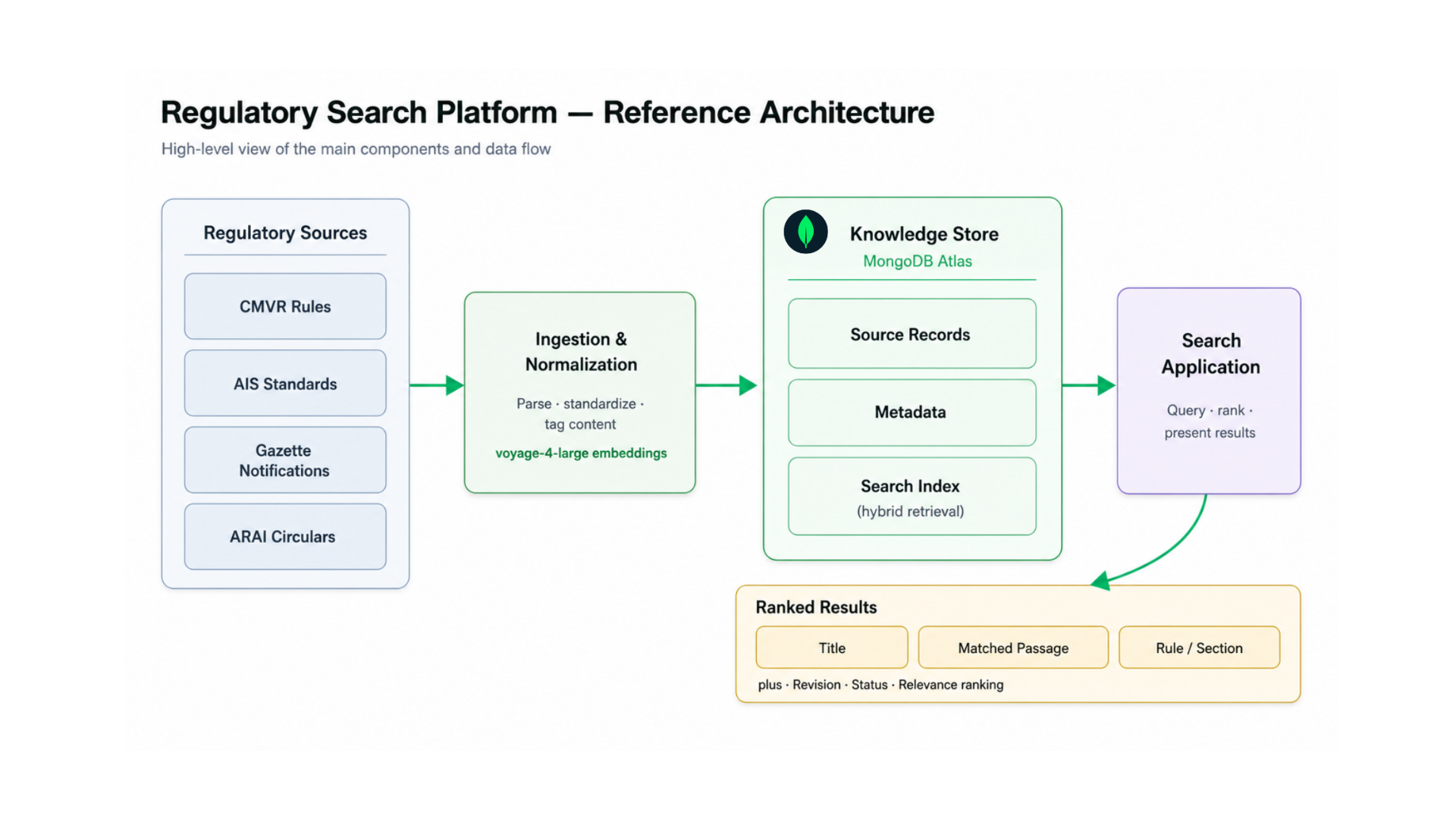
Figure 1. End-to-end reference architecture diagram
A query such as AIS-[standard identifier], a CMVR rule number, or “rear seatbelt requirement for passenger vehicles” follows the same high-level path:
The application identifies applicable search terms and optional filters, such as category, revision, effective date, or active status.
MongoDB Search retrieves lexical matches for exact identifiers, abbreviations, and terms in the source text.
MongoDB Vector Search retrieves semantically similar passages for natural-language requirements and terminology variations.
The application fuses and ranks the candidate sets, applies lifecycle filters, and projects the provenance fields required for verification.
The result view presents the matching passage alongside its source context.
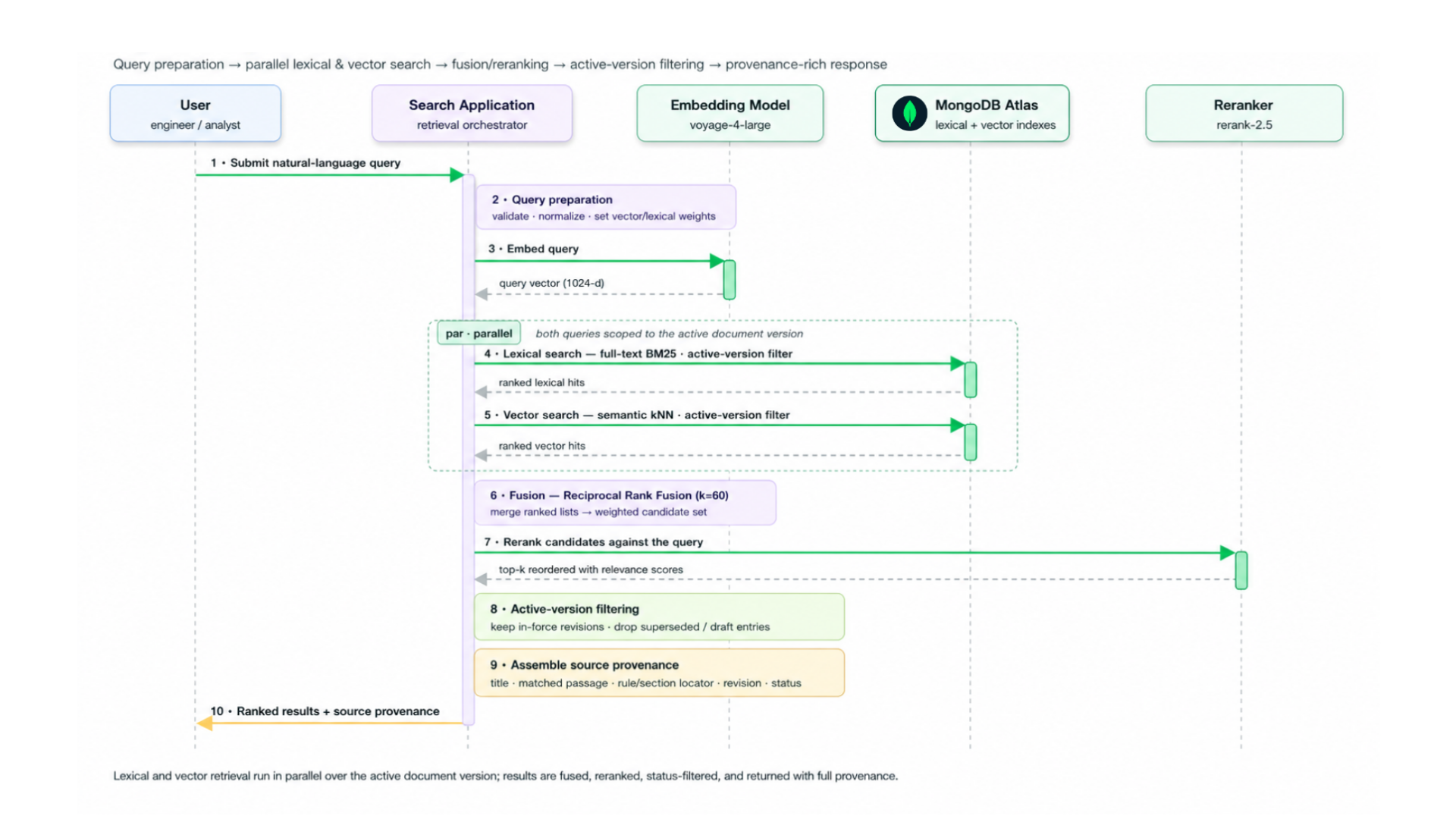
Figure 2. Hybrid-retrieval sequence diagram
数据模型方法
A searchable record should contain both the text that is retrieved and the context that makes that text verifiable. For a regulatory corpus, the application should retain the document identity, the section or rule hierarchy, the revision that was indexed, and a stable locator back to the original material.
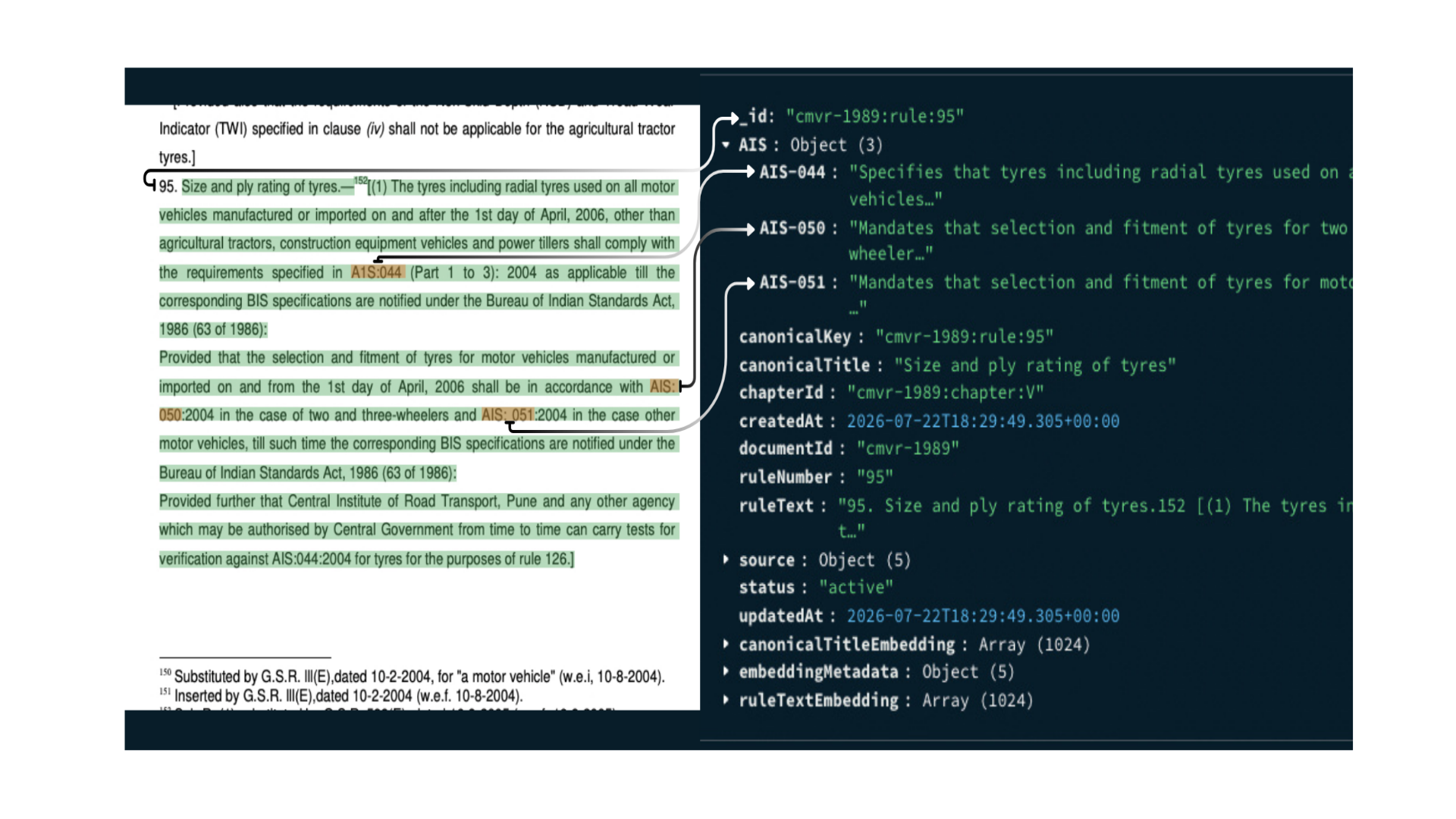
Figure 3. Document-to-record transformation visual
The following is an illustrative schema only.
{ _id: '<documentId>:rule:<ruleNumber>', AIS: { 'AIS-XXX': 'Summary of what this standard requires.', 'AIS-YYY': 'Summary of another referenced standard.' }, canonicalKey: '<documentId>:rule:<ruleNumber>', canonicalTitle: '<Short descriptive title of the rule>', chapterId: '<documentId>:chapter:<chapterNumber>', createdAt: ISODate('<YYYY-MM-DDTHH:mm:ss.sssZ>'), documentId: '<documentId>', ruleNumber: '<ruleNumber>', ruleText: '<Full rule text, including sub-rules, provisos, tables and footnotes>', source: { documentName: '<Official title of the source document>', pdfFile: '<source-file>.pdf', pages: [], chunkCount: NumberInt('<numberOfChunksExtracted>'), extractionModel: '<extraction-model-name>' }, status: 'active', updatedAt: ISODate('<YYYY-MM-DDTHH:mm:ss.sssZ>'), ruleTextEmbedding: [/* float[<dimensions>] */] }
The ruleText field contains the primary regulatory passage, while canonicalTitle and ruleNumber enable rapid verification of the requirement. Structural metadata, including documentId and chapterId, maintains the relationship between a specific record and its parent chapter hierarchy. The source object provides the provenance required for traceability to the original PDF, page numbers, and extraction model. For standards-specific context, the AIS object captures cross-references and summaries of linked requirements. Record lifecycle is tracked via status, createdAt, and updatedAt. Finally, the ruleTextEmbedding and associated metadata fields store the numerical vector representations and model details that power semantic retrieval.
构建解决方案
This section describes the build flow for the hybrid-search implementation. Access the full source code in the GitHub repository.
Prepare the source corpus
Collect the CMVR rule text, AIS standards, and the notifications or circulars that change their applicability. For each source, capture the original file or URL, document type, identifier, revision, publication date, effective date, and current lifecycle state.
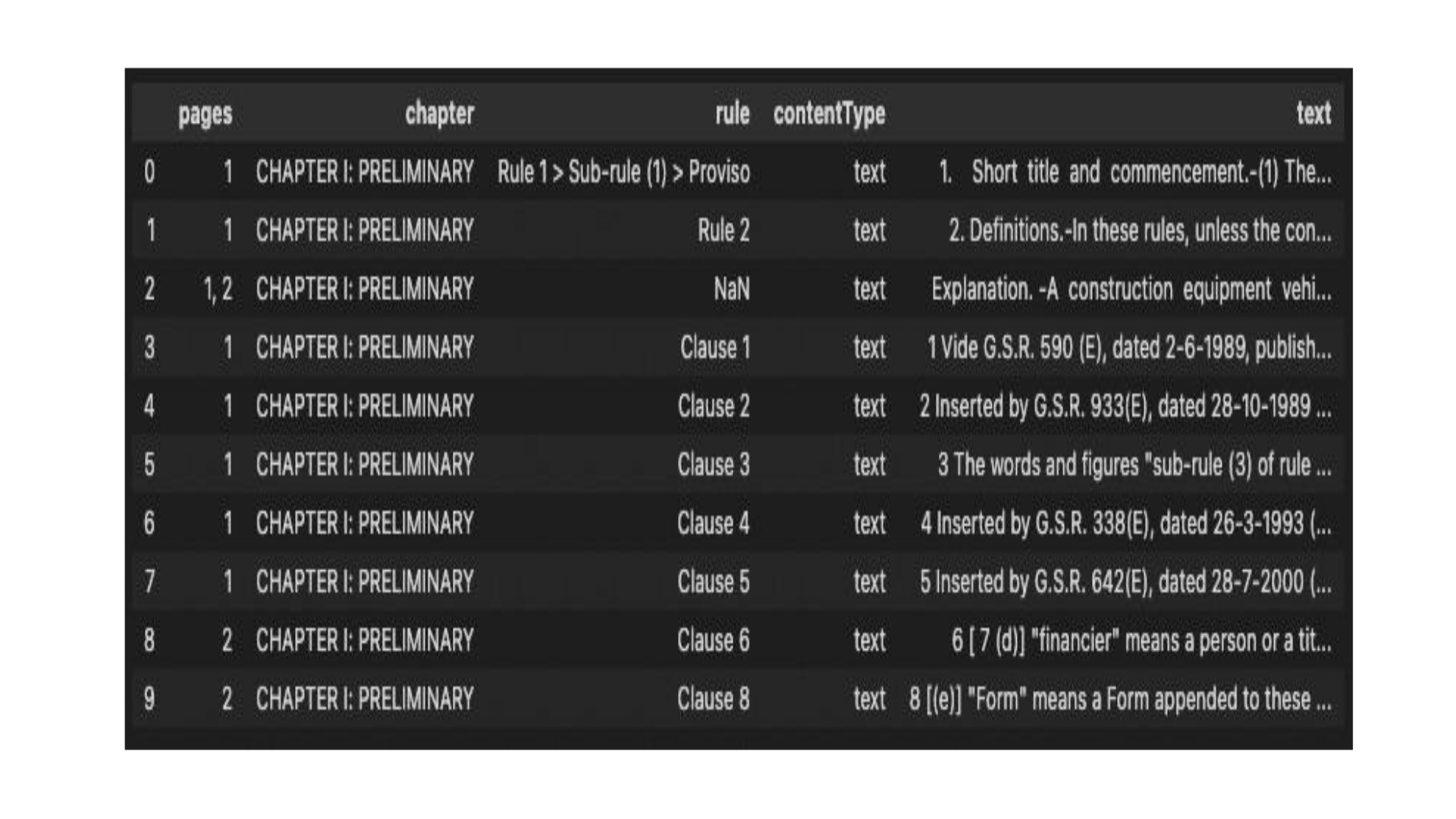
Figure 4. Source corpus information
Normalize documents into searchable records
Extract rule- or section-level text, preserving the hierarchy required to identify a result in the original source. Create records that pair the searchable content with provenance, document lifecycle, and filtering metadata.
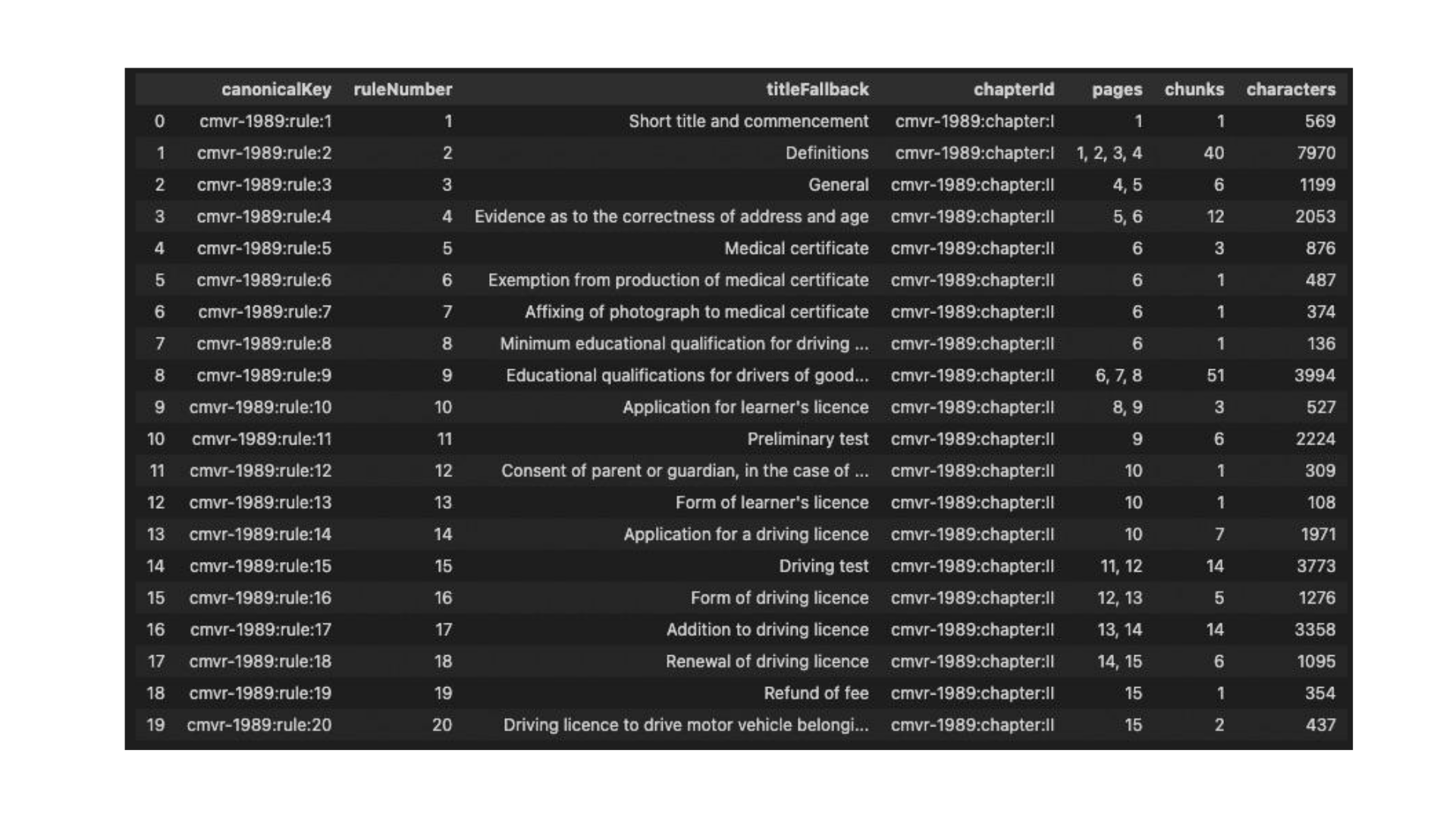
Figure 5. AIS document schema structure
Create the hybrid-search indexes
Create a MongoDB Search index for exact identifiers and textual matching, and a MongoDB Vector Search index for the embedding field. Define mappings, analyzers, filters, vector dimensions, and similarity metric from the verified implementation.
搜索索引
{ mappings: { dynamic: false, fields: { canonicalTitle: { type: "string", analyzer: "lucene.english" }, ruleText: { type: "string", analyzer: "lucene.english" }, documentId: { type: "token" } } } }
向量搜索索引
{ fields: [ { type: "vector", path: "ruleTextEmbedding", numDimensions: 1024, similarity: "cosine" }, { type: "filter", path: "documentId" } ] }
Execute lexical and semantic retrieval
For a user query, retrieve keyword candidates and vector candidates, then combine them with the application’s verified fusion or reranking logic. Apply category, status, revision, or effective-date filters before returning results so a superseded passage is not represented as current.
Return results with provenance
Present the matched text with the title, rule or section reference, source locator, revision, effective date, and lifecycle status. A relevance score can help rank candidates, but it does not establish regulatory compliance or legal correctness. The user must be able to inspect the original source material.
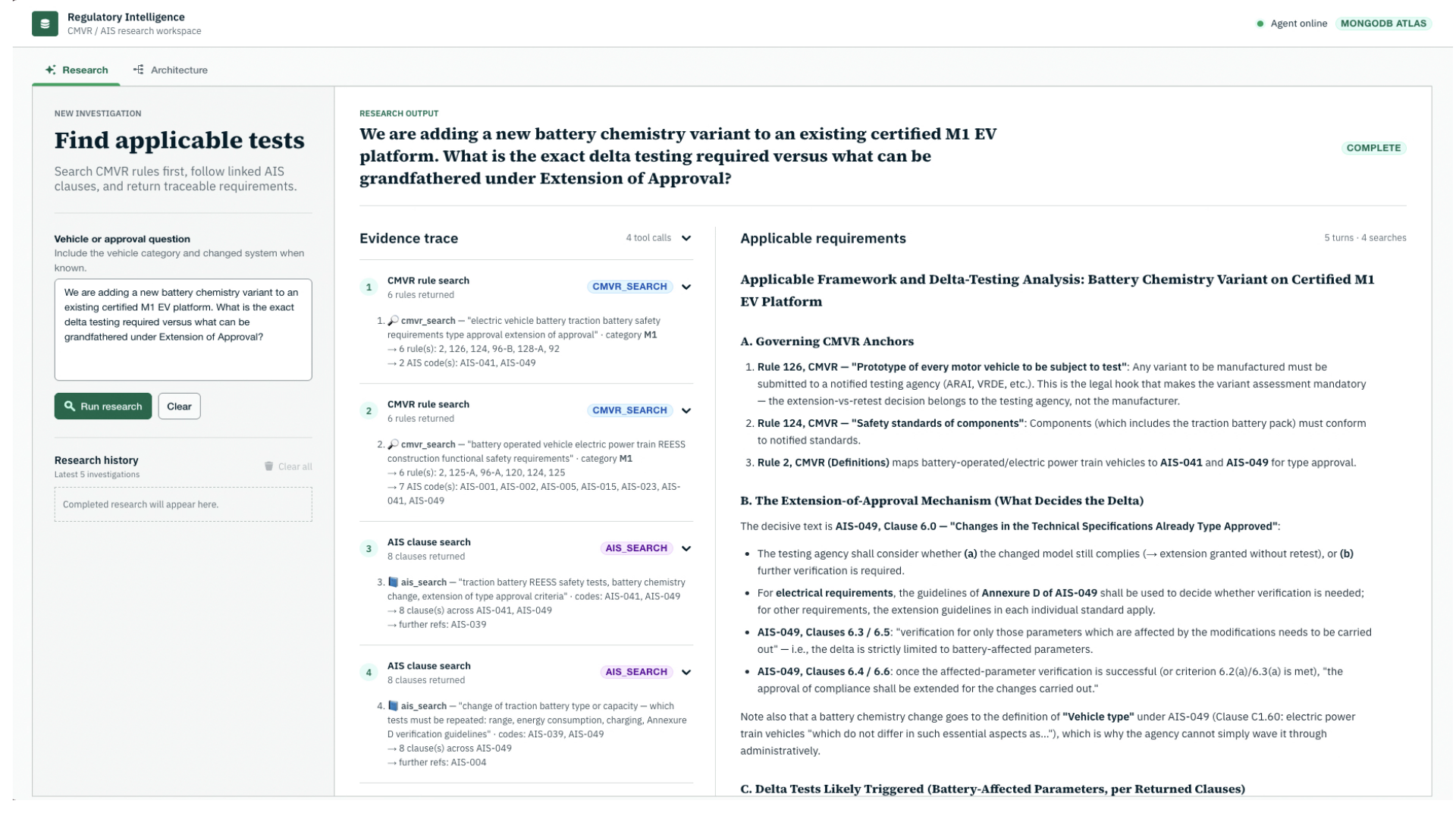
Figure 6. UI screenshot showing a query
Evaluate retrieval quality and document lifecycle
Build a labeled evaluation set containing identifier searches, abbreviations, synonyms, natural-language requirements, revision-sensitive queries, and no-result cases.
When a document is amended, withdrawn, or superseded, update its lifecycle metadata and make that state visible in search results. The system should support source verification; it should not be positioned as legal, regulatory, or compliance advice.
关键要点
Specialized regulatory search requires more than text matching: Pairing lexical and semantic retrieval serves exact standard identifiers and the varied language users apply to the same requirement.
Provenance is a product requirement: Every retrieved passage should retain a stable source identifier, locator, document revision, and lifecycle state so users can validate the underlying material.
Document revision is part of relevance: A relevant but superseded clause should not be presented as the current requirement.
Hybrid search should be evaluated against representative user queries: Candidate counts, result limits, fusion weights, and latency targets must be selected from the actual workload rather than copied as defaults.
A source-grounded search experience speeds up verification: This improved experience helps users locate and verify material faster; it does not itself make a compliance determination.
作者
Utsav Talwar, Solutions Architect, MongoDB
Humza Akhtar, Field CTO, Manufacturing Industry, MongoDB