The MongoDB custom resource defines database deployments that the Kubernetes Operator manages. Your custom resource specifications define these resources, and the Kubernetes Operator monitors them. When you update a resource's specification, the Kubernetes Operator pushes the changes to Ops Manager, which modifies the MongoDB deployment's configuration.
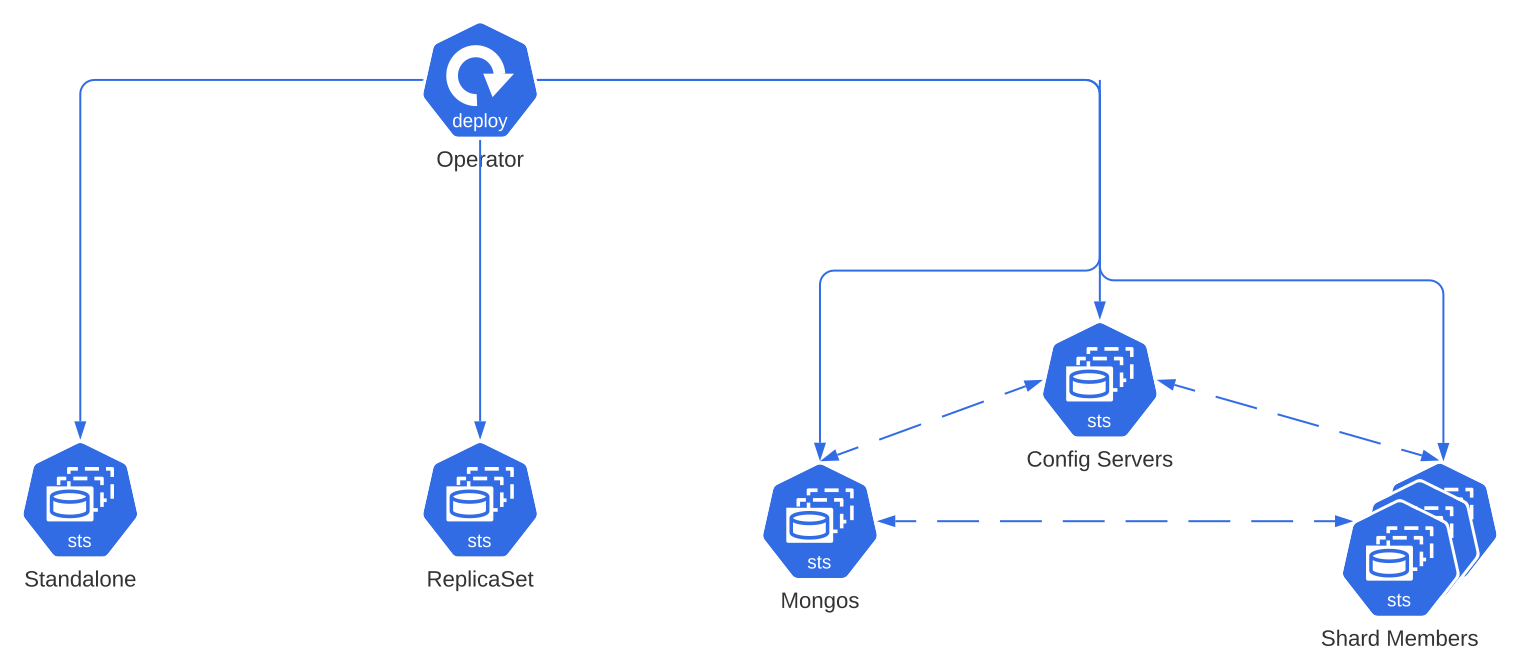
The MongoDB CRD supports three deployment types. The following diagram illustrates the composition of each:
Warning
Kubernetes Operator doesn't support arbiter nodes.
Standalone Resource
Even though you can deploy a Standalone resource, we recommend that you deploy a ReplicaSet resource with one member instead, because a replica set allows you to add members in the future. In Kubernetes, a Standalone resource is equivalent to a ReplicaSet resource with only one member.
For a Standalone resource, the Kubernetes Operator deploys a replica set with a single member as a StatefulSet. The Kubernetes Operator creates the StatefulSet, which contains the Pod specification, and relies on the Kubernetes StatefulSet Controller to create the Pod for this single mongod instance.
Replica Set Resource
For a ReplicaSet resource, the Kubernetes Operator deploys a replica set as a StatefulSet, with a number of members equal to the value of spec.members. The Kubernetes Operator relies on the Kubernetes StatefulSet Controller to create one Pod per member. Each Pod runs a MongoDB Agent instance that manages the mongod process on that Pod.
Sharded Cluster Resource
A ShardedCluster resource consists of config servers, mongos instances, and shard members. The Kubernetes Operator deploys:
One StatefulSet for all config servers
One StatefulSet for all
mongosinstancesOne StatefulSet for each shard
The Kubernetes Operator relies on the Kubernetes StatefulSet Controller to create one Pod in each StatefulSet. For a sharded cluster with 2 shards, this means 4 StatefulSets total (1 for config servers + 1 for mongos + 2 for shards).
Deployment Type | StatefulSets | Size of StatefulSet |
|---|---|---|
Standalone | 1 | 1 Pod |
Replica Set | 1 | 1 Pod per member |
Sharded Cluster | <numberOfShards> + 2 | 1 Pod per |
MongoDB Resource Reconciliation
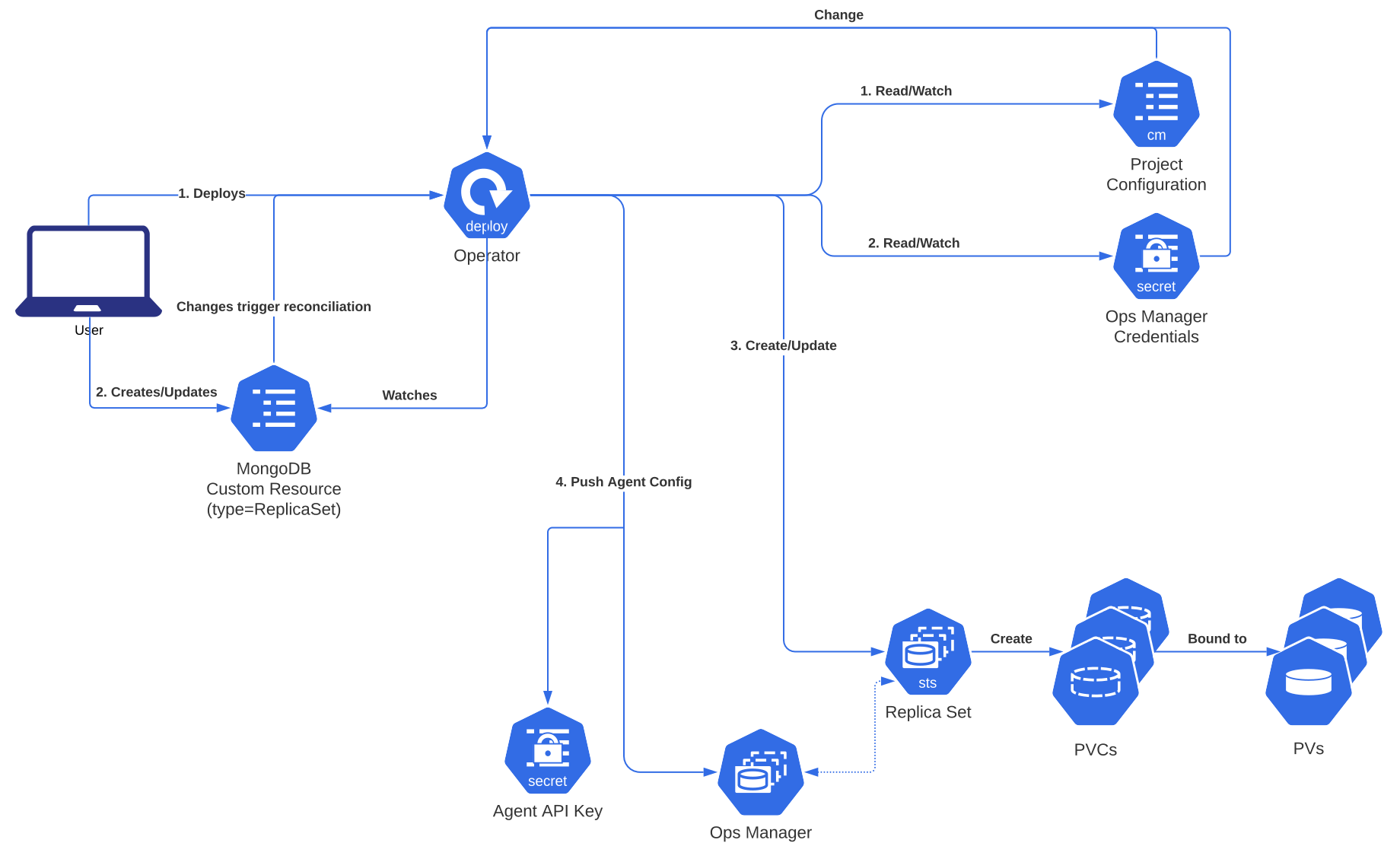
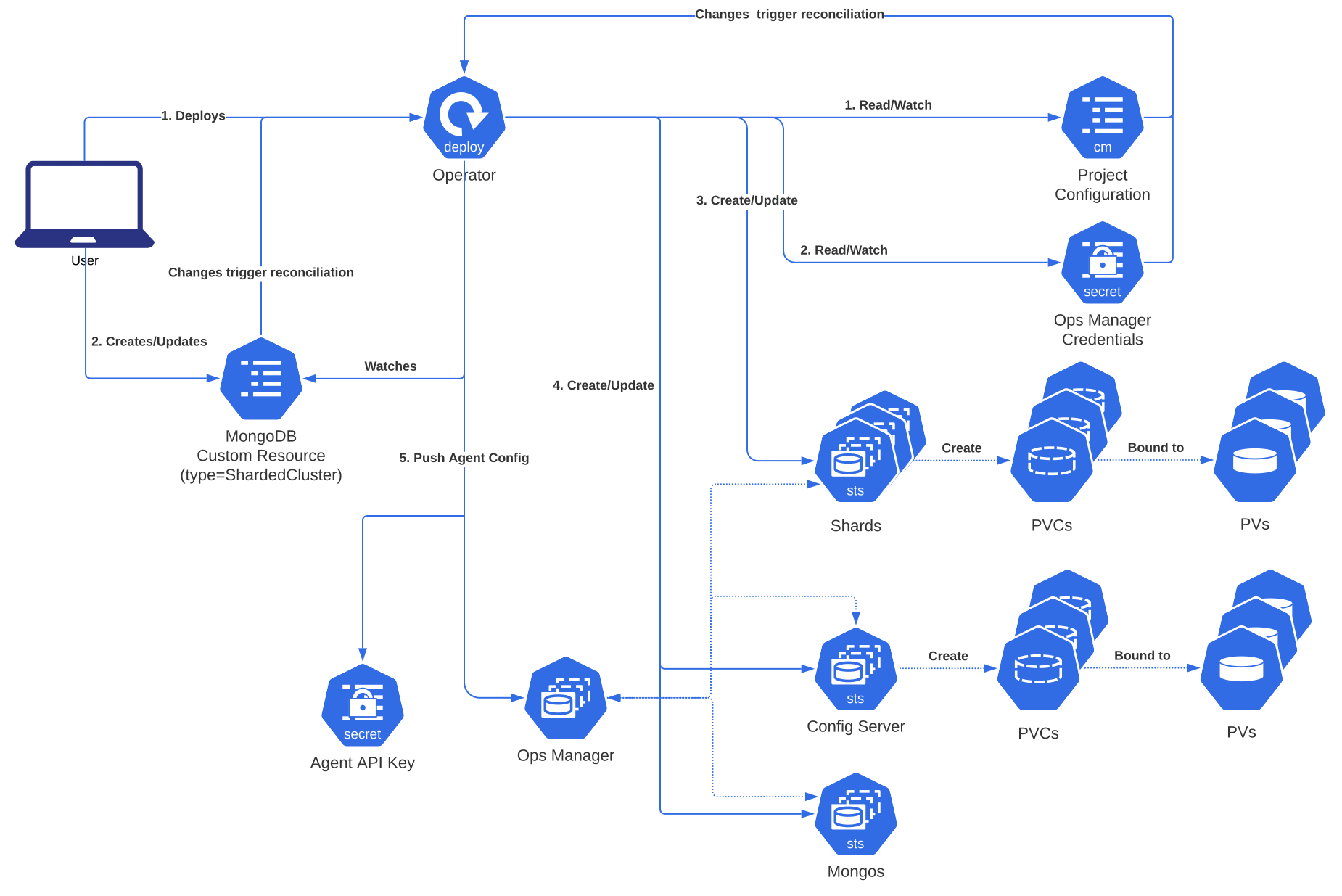
When you apply a MongoDB custom resource specification, the Kubernetes Operator deploys each resource as a StatefulSet. The Kubernetes Operator then enters a continuous reconciliation loop:
Reads project configuration from the ConfigMap specified in
spec.opsManager.configMapRef.name.Reads API credentials from the Secret specified in
spec.credentialsor from your secret storage tool.Connects to Ops Manager and performs the following:
Reads the organization from the
orgIdin the ConfigMap.Reads or creates the project specified in
projectName.Verifies the
<project-id>-group-secretexists, or creates it with Ops Manager API keys.Registers the Kubernetes Operator as a watcher of the ConfigMap and credential Secrets.
Verifies TLS and X.509 certificates, if enabled:
For replica sets: looks for certificates in
<prefix>-<resource-name>-cert.For sharded clusters: looks for certificates in
<prefix>-<resource-name>-x-cert(per shard),<prefix>-<resource-name>-config-cert(config servers), and<prefix>-<resource-name>-mongos-cert(mongosinstances).
Creates or updates StatefulSets. The number depends on the deployment type. At this point, each Pod runs a MongoDB Agent but does not yet contain
mongodinstances.Each MongoDB Agent polls Ops Manager for the automation configuration.
On non-static containers, the MongoDB Agent downloads MongoDB binaries with the version specified in
spec.version.After receiving the configuration, the MongoDB Agent starts
mongod.The Kubernetes Operator generates PersistentVolumeClaims for each Pod (except
mongosPods), unlessspec.persistentisfalse.
Pushes automation configuration updates to Ops Manager. Each MongoDB Agent polls for the updated configuration and applies it. If you change any field, the Kubernetes Operator performs a rolling update of the StatefulSets.
Creates or updates Kubernetes Services:
For
ReplicaSetorStandalone: a headlessClusterIPservice named<resource-name>-svc.For
ShardedCluster:mongos: uses the name inspec.serviceor<resource-name>-svc.Config servers:
<resource-name>-cs.Each shard:
<resource-name>-sh.
The following diagram illustrates the reconciliation flow for replica sets:
The following diagram illustrates the reconciliation flow for sharded clusters:
MongoDBUser Resource Reconciliation
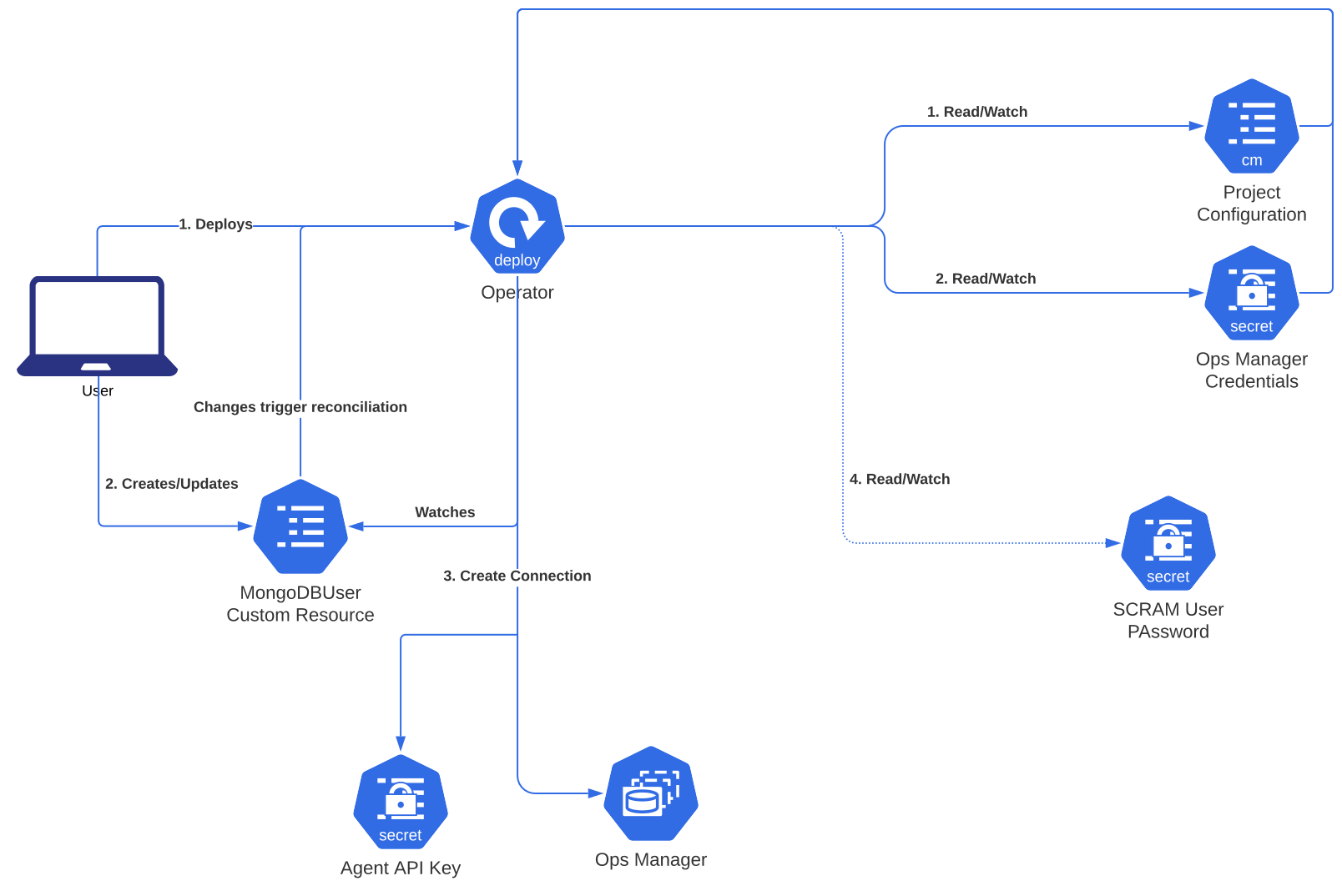
If the user authentication method is SCRAM, the MongoDBUser resource depends on a secret that stores user credentials. The Kubernetes Operator watches the Secret for changes and reconciles as follows:
Determines the MongoDB user's resource from
spec.MongoDBResourceRef.name.Connects to Ops Manager, reads the organization and project, and verifies the agent secret.
Updates the user's credentials in Ops Manager or creates a new user if it doesn't exist. If the username has changed, the Kubernetes Operator removes the old name and adds a new one.
The following diagram illustrates the MongoDBUser reconciliation flow: