


INTRODUCTION
Unlocking sales productivity and growth with AI
Sales productivity startup Scalestack is driven by a lofty mission. The company — which was founded in 2021 by veteran startup entrepreneurs Elio Narciso and Alex Prioni — builds products that “make computers work for humans, so they can focus on what really matters,” according to its website.
Scalestack seeks to bring order to often chaotic go-to-market (GTM) data. Specifically, Scalestack helps customers manage both structured and unstructured data, from first-party CRM data to third-party data from sources like LinkedIn. The company’s AI-powered, all-in-one GTM data orchestration and activation platform helps a growing list of customers — including MongoDB’s own sales team — spend less time manually researching and organizing data, and more time executing.
To make its mission a reality, Scalestack turned to MongoDB and Amazon Web Services (AWS). With the industry’s most popular data platform and the world’s most comprehensive and broadly adopted cloud services provider, respectively, the choice of MongoDB Atlas on AWS was simple.
“Scalestack’s mission is to help organizations unlock sales productivity, and our relationship with MongoDB and AWS has been integral to achieving that,” said Narciso.
THEIR CHALLENGE
Big data, small team
Research by Salesforce backs up Scalestack’s mission. A survey of nearly 8,000 sales professionals showed that they “spend just 28% of their week actually selling, with the majority of their time consumed by other tasks,” like manually researching and prioritizing prospects, and data entry.
The issue, Narciso said, is that there is no tech to easily connect GTM data to customers’ Ideal Customer Profiles (ICP) and sales engines, hence sales professionals waste time reconciling data sets that don't talk to each other. To solve this, Scalestack developed an AI solution that would enable customers to aggregate and understand a variety of data from disparate sources, helping reps execute sales plays (repeatable, scenario-specific strategies to help sales reps succeed) with context.
Indeed companies — particularly enterprises — usually have three big GTM data “buckets,” said Narciso. The first is their customer relationship management (CRM) system, which contains lots of “first party” data about target companies and prospects. The second GTM data bucket is “third party data” from external sources, which is often purchased. Examples include Linkedin data, news data, and information from Crunchbase, Zoominfo, job postings and more. And the last bucket is “zero party” data that comes from marketing motions like lead generation forms, or when people share data as part of the process of registering to use a product. As a result, GTM teams spend a lot of their time organizing all of this data, sometimes even doing so manually.
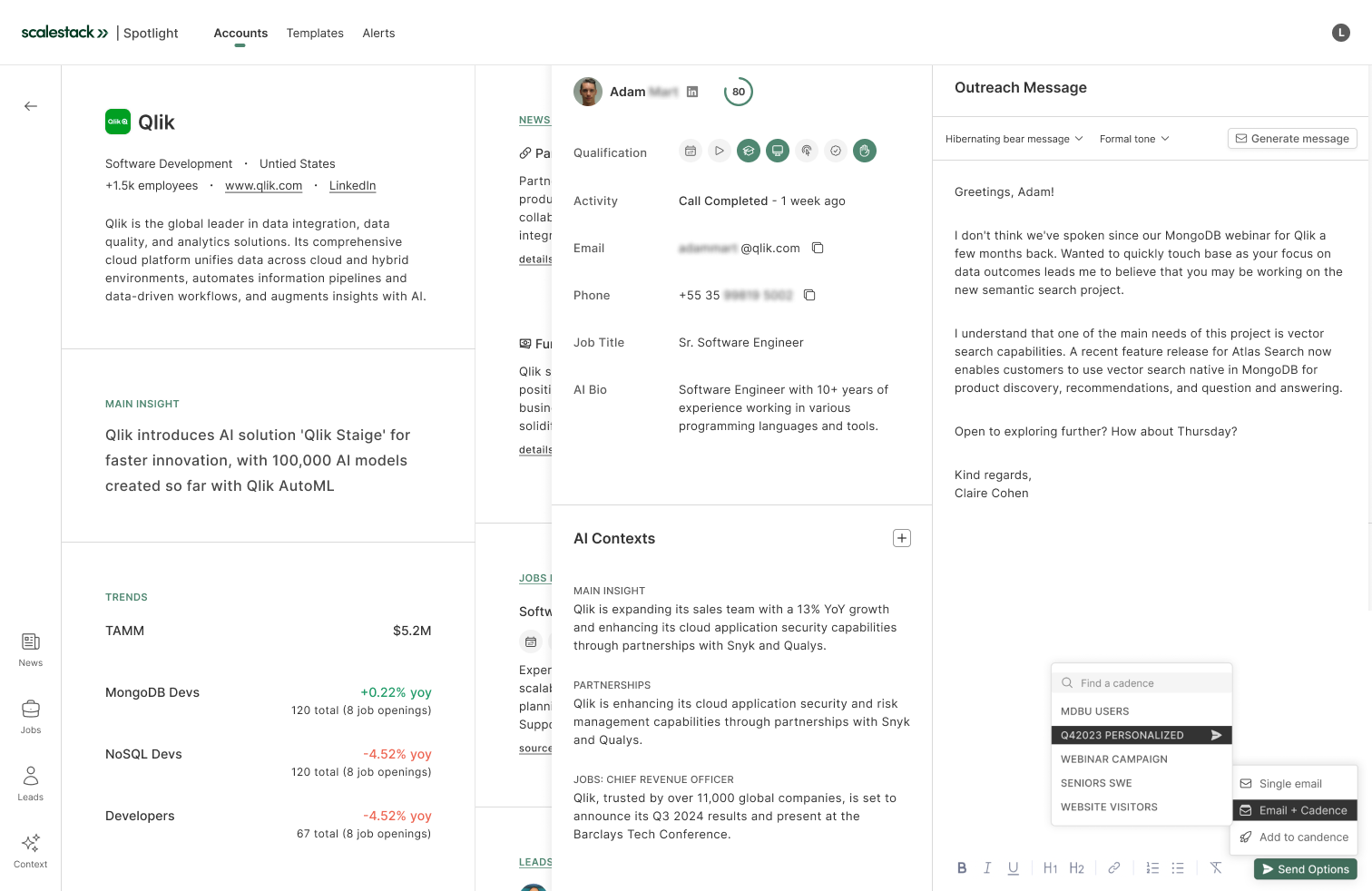
Scalestack's AI platform brings the GTM data “buckets” together in an easy and intuitive automated “workflow,” suggests prioritized actions, and helps sales representatives execute their sales plays. It unlocks a new level of sales productivity and growth for customers, Narciso said.

_1.svg)