


INTRODUCTION
More than 135 years of mutuality
Nationwide is a British financial services provider and, with more than 15 million members, it's the world’s largest building society.
Nationwide’s story goes back to 1884 when the Society’s founder proposed that the co-operative movement should set up its own building society. Back then life was relatively simple. Banking products were only available to the wealthy, and the working classes found it hard to secure credit and long-term housing. These ordinary working-class folk needed a place to save and borrow money. They wanted a Mutual Society built to meet their needs and to provide new financial opportunities.
It was for these reasons that the Nationwide Building Society was formed, and more than 135 years later, that solid foundation of mutuality remains.
Life has changed drastically since the late 19th century, yet Nationwide remains a household name to UK customers. Today it helps its members with current accounts, mortgages, savings, and other personal finances, and continues to evolve its services.
Customers’ expectations are evolving, too. With emerging challenger brands offering new ways of banking, a demand for better service has intensified. In 2021, the need for online and digital banking services has never been more important. Just as it was back in 1884, Nationwide is innovating with financial products and driving customer engagement — though to do so this time, the Society needed to evolve its technology stack to keep pace as its services expanded.
THE SITUATION
Striving for online real-time capabilities
This demand for new services and features continues to expand and change. Despite thousands of updates since 2012, Nationwide’s mobile banking platform must continue to evolve with new capabilities. Many customers now expect digital-first products, but they also want a more intuitive way to use them. They expect to see all of their accounts in real-time, and to be able to set rules for better money management. “Some of our customers expect to do everything online now and demand real-time action,” said Rob Jackson, Head of Application Architecture at Nationwide. Online capabilities and real-time information make for a simple consumer experience, yet the technological challenge to bring this to life for Nationwide is complex. If one of these online tasks was taking longer than it should, or if data wasn’t integrated correctly, customer experience would suffer. To avoid that, Nationwide had to be able to track them, fix them and update them in real time.
To meet customer demands, it would take an entirely new approach where the Society’s underlying technology infrastructure and software operations would need to be updated.
THE CHALLENGE
Migrating from mainframe to modern technology
Nationwide’s ongoing reliance on mainframe technology was a clear starting point for Jackson and the team.
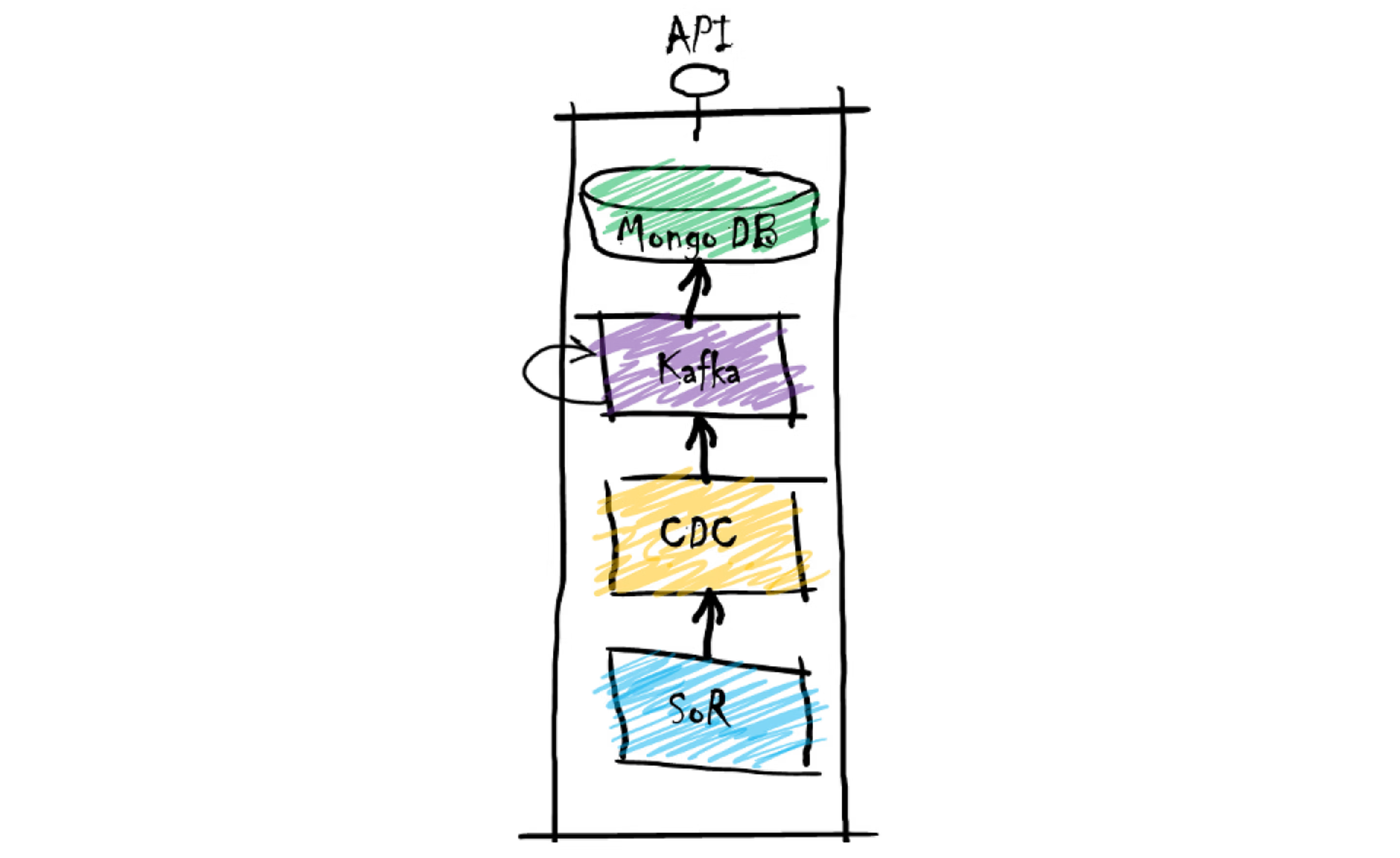
From 2012, the Building Society had been storing and processing a huge number of customer touchpoints (from the web, mobile, and in-branch) in silos in this legacy technology. It was hard to work with and was slowing down development practices. With real-time data always flooding in, the speed and diversity of this information was starting to challenge the environment. To deliver new digital services, the Building Society needed a way to get that data out of the mainframe as quickly as possible so that it could provide customers with the most recent information. One solution would be to scale the mainframe but that would have been “too slow and too expensive,” said Jackson. Instead, the team looked to “offload” the mainframe - a process of replicating data stored on the mainframe to a new real-time event-streaming platform. The platform would help bring together all of the data, make it easier for its developers to work with, and to release those new capabilities. The real-time event-streaming platform was called Speed Layer and it would be the Building Society’s source of high volume data requests and event sourcing - where all app changes were stored as a sequence of events.
“It would mean that we could finally break down data silos, and merge and enrich data, in real time. Only then could we better support the Society’s agility and innovation,” Jackson said. To do all of that, the team required a new modern database to query, manage, and scale all of this information. They needed it to be flexible, easy for the developers to use, and able to store mission-critical data securely at scale.


_1.svg)