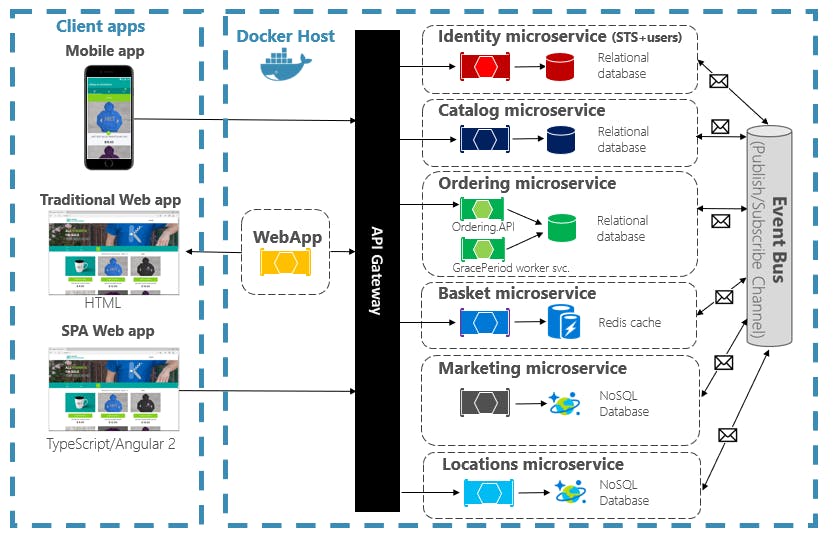
Businesses need to respond quickly to competitive threats, ever-changing market trends, and new technology to compete effectively. This requires software designed and built very differently than older systems engineered in traditional, on-premises IT or even in some existing cloud computing environments. Developers need the advantages of cloud native computing with its microservices infrastructure, speed of application deployment, automation, and virtualized resources. By 2025, Gartner estimates that over 95% of new digital workloads will be deployed on cloud-native platforms, which is up from 30% in 2021.
With that said, there is often a fundamental disconnect on what cloud native computing actually is, why it's important, and how cloud native application benefits can be realized. This guide will provide you with a better understanding of cloud native computing and its benefits, as well as how to begin implementing cloud native application development in your own organization.
Cloud native definition
When the term "cloud native" is used, it means that the technologies, services, and development activities associated with a specific application have all been built and resided in the cloud from the very beginning. This method of building and managing applications makes the most of the elastic, distributed resources cloud computing environments offer. Cloud native architecture and development differs from "cloud enabled" application development, where a traditional (local or on-premises) development environment is used and then the application is later transitioned to the cloud, or "cloud based" development where certain aspects of an application are stored, accessed, or managed via the cloud (e.g., third-party hosting).
Key elements of cloud native computing
To access the benefits of cloud-native technologies, it's important to understand key cloud native elements and how they work together to create a competitive advantage for business interests, governments, and nonprofits alike.
A collaborative development and operations (DevOps) approach
Based on Agile and lean principles of application development, the cloud native development and operations (DevOps) approach delivers more resilient software which is easier to manage than traditional software systems — all in an abbreviated timeframe. This approach, sometimes referred to as CICD, includes the following elements:
Continuous integration (CI): Continuous integration is a modern DevOps method where new code is written more frequently throughout the development cycle and is tested and validated with existing code on a daily basis. Automation is used to conduct testing frequently so that potential issues with each new batch of code can be detected early and fixed quickly. This keeps issues from cascading throughout the code base and slowing the delivery of updates and features.
Continuous delivery (CD): CD focuses on automating the delivery of the higher-quality code that CI provides. To deploy the code as quickly as possible, CD relies on the use of small software programs focused on a specific task (microservices) rather than delivering one large application that completes all tasks. This DevOps approach enables the delivery of microservices as they're ready, as opposed to the traditional approach of awaiting all updates required for a large application, while taking advantage of automation which keeps this continuous delivery from taking up additional developer time.
Infrastructure as code (IaC): The incorporation of IaC, a descriptive model used to define and deploy infrastructure (e.g., networks, virtual machines, load balancers, connection topologies), produces the same environment in every deployment. This allows developers to build applications in a much shorter time frame since adjustments for various environments are no longer needed.
Microservices architecture
Microservices architecture breaks applications into small self-directed software components. These small, independent components focus on a specific task or problem but they can also work collectively to perform functions as needed. Cloud native development is fueled by modular, loosely coupled microservices which enable faster, easier application rollouts and updates. Microservices are also a necessary element of the cloud native continuous delivery method.
Containers
Containerization is a critical tool for developers as they build cloud native applications within their overall software development process. Specifically, container technology enables the bundling of applications, and everything that application needs to run, into an independent lightweight unit (called a container). Container images software is used to perform the bundling of containers, which is also a key component of CICD cloud native applications development.
Containers can also be stored in container registries so that developers can access and deploy them as needed. The continuous integration of microservices and containers enables development teams to deploy applications in any environment without worrying about that environment's operating system. Container orchestration automates the provisioning, deployment, networking, scaling, availability, and lifecycle management of containers (IBM, 2022) while optimizing container runtime. Kubernetes, one of several open source container orchestrators, is the most commonly used and has been accepted into the Cloud Native Computing Foundation (CNCF). Additional information on CNCF container orchestrators is available on the CNCF website.
Application programming interfaces (APIs)
APIs are small programs that help applications talk to (interface) with each other and facilitate information delivery between microservices. In cloud native architecture, APIs work agnostically across public, private, and hybrid cloud environments to connect microservices, simplify maintenance, and enhance security. For example, a major hotel chain may have an extensive website and reservation management system that they've built in the cloud, but they need more traffic to increase reservations. Developing APIs that allow potential guests to access their site via travel aggregators such as Hotels.com or Expedia is an excellent way to do that with minimal effort or modification to their existing site.
Backing services
In cloud native environments, backing services are considered anything that an application contacts across a network while completing a function or task. Backing services can be provided by local app owners within the cloud infrastructure or third-party providers. Some examples of backing services include caching systems, outbound email (SMTP services), identity verification, databases/data storage, or even consumer services accessed through APIs (e.g., Google maps). Backing services are easily "added on," or accessed by cloud native apps without significant effort or changes to the cloud infrastructure. This means that backing service functionality can be added to a cloud native app without additional software development or significant resource investment.
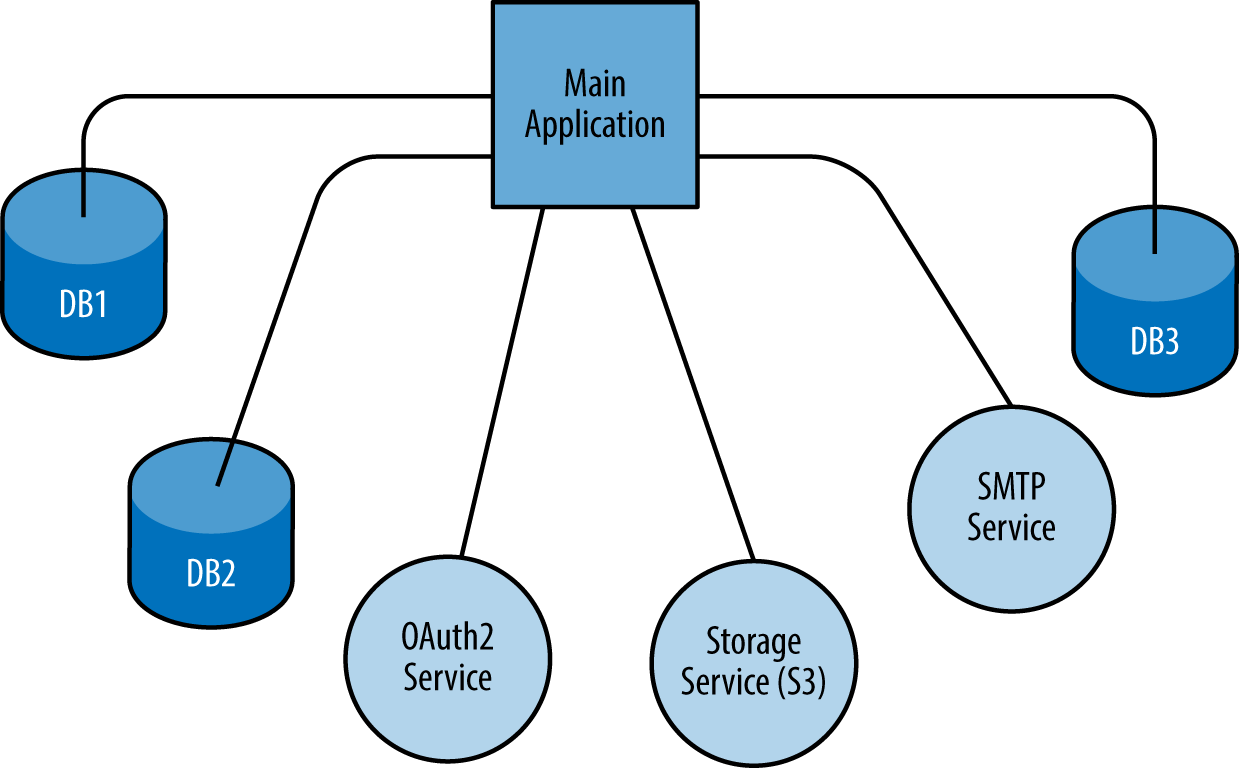
_(Source: Beyond the Twelve-Factor App, Kevin Hoffman, 2022.)_
Cloud native development benefits
The unique elements of modern cloud native architectures enable developers to build applications far more quickly than in traditional cloud environments, The automation, scaling, and ease of features deployment in cloud native environments support a rapid "build and run" software development process that benefits development teams, users, and business objectives.
Architecturally, cloud-native apps are virtualized, function in autonomous containers, and run on shared infrastructure as opposed to on-premises applications that can only be operated in non-virtualized spaces. And, unlike traditional on-premises software which is tightly linked with network-level resources which will break if applications are moved or altered, cloud native applications are abstracted from physical infrastructure and networks, so they can be readily modified or moved.
Some additional benefits to cloud native applications include:
Scalability
Cloud native computing enables developers to build and run scalable applications inherently designed to automatically engage extra cloud resources as needed, and scale them back when resource demand subsides. This is a distinct competitive advantage cloud native applications use to increase efficiency, enhance user experience, and safeguard application resiliency. Conversely, cloud-enabled applications do not automatically scale due to their traditional design and potential lack of virtualization. And, while cloud based applications may offer some scalability, this depends on which application aspects are cloud managed and to what extent their managed environment supports scalability.
Speed to market
The Cloud Native DevOps CICD approach enables developers to deploy new features, services, and upgrades quickly, increasing speed to market significantly. The use of automation, loosely coupled microservices, and untethered cloud native infrastructure all help business leaders to reach business KPIs more quickly while freeing their teams to work more effectively in cloud native applications development.
Better customer experience
One of the key benefits of cloud native applications is its ability to enhance the customer experience. This enhancement is possible due to the flexibility, resiliency, and unique architecture that cloud native development offers.
There are two customer experience areas where cloud native applications really shine.
Outage avoidance: All software requires fixes, upgrades, and patches from time to time. In cloud enabled applications, which are still tethered to physical infrastructure and networks, outages are common as these changes are made and customers become frustrated. Cloud based applications often experience the same types of outages, but the length and severity often vary depending on the third-party cloud provider's environment being used. Cloud native applications, on the other hand, are abstracted from physical infrastructure and networks which makes outages far less frequent and of shorter duration. This enhances customer experience as well as the application's resiliency reputation.
Product and feature releases at the pace of customer needs: When a business embraces cloud native software development and its teams become more agile, one result is that the business is able to react more quickly to customer needs and expectations. For example, if customers are interested in new types of tools or services, in a cloud native environment it is no longer necessary to rework an entire application. Developers can simply add the functionality as a backing service and access it via various APIs or a microservice can be created to deploy the desired functionality. Cloud native solutions with microservice architectures can be built for customers in a fraction of traditional development timelines and businesses can deploy them quickly through continuous delivery.
Security
Just as with any computing environment, cybersecurity is of paramount importance. For many companies, cybersecurity knowledge and experience isn't readily available within the organization but there are a variety of respected, experienced firms offering managed cybersecurity services in the cloud native environment (e.g., Google, IBM, Microsoft, AWS). There are also security services available via open-source organizations, like Kubernetes, for those companies just getting started. As a result, businesses can move into the cloud native app world quickly, and take advantage of ready-access cybersecurity services to maintain a robust security posture.
In addition, there are some intrinsic cybersecurity benefits to cloud native applications. For example, as each microservice is built, security is designed for that tiny program (e.g., "secure by design") rather than one security system applied to a large application —this positively impacts cloud native application security posture from the beginning. Further, given the ever changing nature of cloud native code due to the CICD method, there is a more narrow window for bad actors to access, study, and exploit code weaknesses.
Cost efficiency
Given the fast deployment, significant scalability, ease of modification and maintenance, and security advantages of cloud native technologies, it's not surprising that cost efficiencies are realized by this type of cloud computing. For example, scalability means that cloud native apps adjust their consumption of resources as needed rather than staying at the maximum level required. This enables a consumption-based cost model where significant cost savings can be realized. In addition, because cloud native technologies are not reliant upon traditional development environments, development teams can deploy cloud native apps more quickly and modify them or add new features with much less effort from developers. This translates to labor and resources expense savings.
Adaptability to new technologies
As new technologies increase the necessary pace of innovation, businesses employing cloud native applications, services, and technologies will be well-positioned to adapt and thrive. Due to their ability to easily scale, microservices architecture, and easy access to backing services, these organizations will be able to quickly add features taking advantage of new tech and capture market share with minimal development lift. In addition, they'll be able to integrate new features across a variety of public cloud, private cloud, or hybrid cloud environments with minimal changes as containers retain all that's necessary for a microservice to run.