This is the fourth in our Teach & Learn blog series, which interviews students and educators worldwide who are using MongoDB to enhance their classrooms. These stories highlight how MongoDB’s platform and resources are revolutionizing education and preparing tech professionals.
Our first blog post explores teaching database systems and MongoDB integration in computer science curriculum with Professor Abdussalam Alawini from the University of Illinois at Urbana-Champaign, and our second blog post covers innovative approaches to MongoDB education and hands-on learning with Professor Chanda Raj Kumar, and our third blog post highlights data science and analytics education with Professor Margaret Menzin from Simmons University.
The MongoDB for Educators program offers free resources and technology for creating interactive learning environments that connect theory and practice. Educators gain access to MongoDB Atlas credits, curriculum, skill badges, certifications, and the global community.
USF and MongoDB: Cultivating the next generation of data scientists
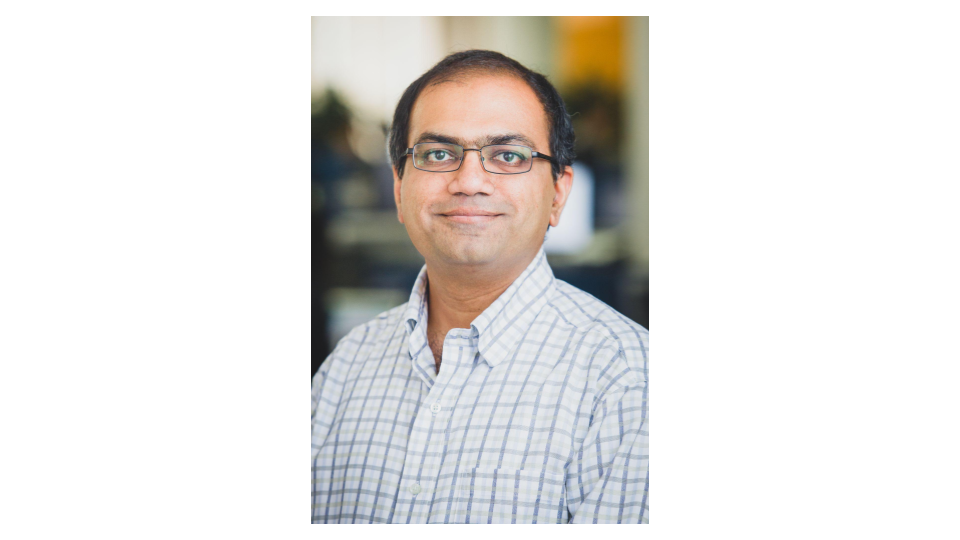
Dr. Mahesh Chaudhari, an Assistant Professor in the Master of Science in Data Science (MSDS) program at the University of San Francisco (USF), stands out as an influential educator and practitioner in the world of data systems. With deep expertise in distributed databases, Dr. Chaudhari has been an early adopter and champion of MongoDB, successfully integrating it into USF’s rigorous data science curriculum.
His commitment goes beyond the classroom: He fosters an active student community and drives research that bridges academic theory with real-world, scalable data engineering solutions. Continue reading to explore Dr. Chaudhari’s journey, his unique approach to teaching NoSQL databases, and the significant impact he’s having on the next generation of data scientists.
1. Tell us about your educational and professional journey and what initially sparked your interest in databases and MongoDB.
The initial spark for data and databases was ignited when I worked in a research lab in India from 1999 to 2001. This led me to take an advanced database course during my master’s at Mississippi State University and ultimately fulfilled my dream of earning a PhD in distributed databases and query optimization from Arizona State University in 2011.
My professional journey began as an early adopter of MongoDB at Zephyr Health. MongoDB (formerly known as 10gen) was launched in 2007, and Zephyr started working with it sometime in 2011–2012. I have worked closely with MongoDB and watched it evolve into a remarkable product. We showcased various use cases with MongoDB during the “MongoDB Days” and other big data conferences, focusing on using ontologies to enhance healthcare data analytics with MongoDB and Neo4j. Fast forward to 2023, when I joined the MSDS program at USF as an assistant professor, and I started teaching MongoDB as part of the data science curriculum.
2. What courses related to databases and MongoDB are you currently teaching?
Currently, I am teaching two graduate-level courses: MSDS-691: Relational Database Management Systems and MSDS-697: Distributed Data Systems. Both courses focus on an eclectic mix of theory and practice, covering various aspects of data management topics such as data modeling and design, data storage and querying, and query optimization for big data. In the relational database course, I emphasize tools like PostgreSQL, Snowflake, and BigQuery. In Distributed Data Systems, I focus on tools like MongoDB, Apache Airflow, Apache Spark, and Google Cloud.
3. What motivated you to incorporate MongoDB into your curriculum?
As part of the MSDS, our goal is to provide students with practical experience in the fields of data science, AI, and data engineering. Introducing the newer generation to different databases is essential for success. In addition to relational databases, exposing them to NoSQL databases is a natural step. MongoDB is a distinctive database solution for introducing NoSQL to students. Since they are familiar with JSON structures, they find it easy to understand and process data in JSON format. We also offer a nine-month practicum where students work on real-world projects provided by companies across various domains. During this practicum, students gain experience working with companies’ technical stacks. Many companies incorporate MongoDB into their infrastructure, making it valuable to expose students to this technology, MongoDB.
4. How do you design your course content to integrate MongoDB in a way that engages students and ensures practical learning experiences?
My pedagogy revolves around hands-on practice and applying theory to engaging real-world problems. The content of the MSDS-697 graduate course aligns with these principles. It focuses on understanding the significance and development of NoSQL databases, contrasting them with SQL databases. Students first learn the basics of MongoDB data types and create, read, update, and delete (CRUD) operations. Next, they practice writing more complex queries using the cursor method and then move on to using aggregation pipelines. Through practical examples, students explore key concepts such as sharing, replication, and the consistency, availability, and partition tolerance (CAP) theorem. The course also includes sections on using tools like MongoDB Compass and MongoDB PyMongo with a local MongoDB installation, as well as the practical application of MongoDB Atlas in group projects.
5. How has MongoDB supported you in enhancing your teaching methodologies and upskilling your students?
The MongoDB team has been phenomenal in supporting my efforts to educate students and prepare them with practical knowledge in data organization and effective query design for faster and more efficient retrieval of semistructured and unstructured data stored in MongoDB. I have received excellent assistance from the MongoDB support team on various aspects of the course. I especially appreciate the help from Sarah Maibach and Kim Yohannan in providing free MongoDB Atlas credits for the students and me throughout the course. A special thanks to Kim for her technical guidance and for providing the answers I needed. She has been an excellent sounding board whenever I needed to bounce ideas about using MongoDB for specific use cases.
6. Have you conducted any projects or studies on students’ experiences with MongoDB? If so, what key insights have you discovered, and how can they benefit other educators?
While I haven't conducted a formal study on students’ experiences with MongoDB, I plan to do so in spring 2026, when the course is offered again. In the meantime, many students have approached me informally, expressing gratitude for including MongoDB as a NoSQL database tool. They appreciated that it helped them qualify for industry jobs and gain familiarity with the software. Additionally, some students were well prepared when their practicum companies required them to work with MongoDB and other tools.
7. Could you share a memorable experience or success story of a project from your time teaching MongoDB that stands out to you?
There are quite a few memorable success stories, but two stand out the most. Both stories involve how I motivated two groups of students to take their group projects further and go beyond ordinary achievements by building scalable and autonomous distributed data platforms to support machine learning models. Even after the course ended, the two student groups and I continued working on these projects. The students were highly motivated to lead the entire initiative, which ultimately resulted in two conference papers. One paper is indexed in the Institute of Electrical and Electronics Engineers (IEEE), and the other is indexed in the Association for Computing Machinery (ACM) and published in The Journal of Computing. This demonstrates the effectiveness of combining different data platform tools with MongoDB Atlas to create a robust data processing platform.
8. How has your role as a MongoDB Educator impacted your professional growth and the growth of the student community at your university?
I don’t think I can summarize the impact in a few words. As a lifelong learner and educator, MongoDB has elevated my expertise in the vast field of NoSQL databases. By becoming an expert in MongoDB data design and writing optimized queries over healthcare data, I was able to teach and train software engineers in building a healthcare analytics data platform. This has led me to have a broader impact on the community by sharing my knowledge and experience with the students at USF on a larger scale. So far, I have taught MongoDB to 200+ students, and they have focused on building data platforms for recommendation systems and user-preference analytics, and fine-tuning AI and large language models.
9. What advice would you give to educators who are considering integrating MongoDB into their courses to ensure a successful and impactful learning experience for students?
All the educators out there: Teach MongoDB to your students! It not only prepares them for industry jobs focusing on NoSQL databases, but it also gives the students a different perspective to handle semistructured and unstructured data at scale. Providing practical examples around sharding and replication, and using MongoDB Atlas as part of their learning journey, gives students a competitive edge in proving themselves in technical interviews.
Next Steps
Apply to the MongoDB for Educators program and explore free resources for educators crafted by MongoDB experts to prepare learners with in-demand database skills and knowledge.