


INTRODUCTION
Transforming the small business economy in India through digitized invoicing, accounting and automated workflows
India is home to more than 60 million small and medium-sized businesses (SMBs), and it's estimated those businesses contribute 30 percent of GDP to the economy. However, only a small portion of those SMBs are taking advantage of digitization and many still operate using pen and paper.
FloBiz is an Indian startup on a mission to change that. The three co-founders, Rahul Raj, Rakesh Yadav and Aditya Naik saw an opportunity to support the small business economy by developing a deep understanding and empathy for their needs, which inspired the founders to invest in building a neobank to support growth and prosperity for small business owners across India.
The startup’s flagship offering —myBillBook — helps SMBs digitize their invoicing, streamline business accounting and automate workflows of their enterprises. myBillBook has now been downloaded over six million times and is available in a simple to use mobile app as well as offline desktop software format. It is a one stop solution which helps SMBs create professional invoices (GST & non-GST), manage stock, collect payments & automate reminders through smart banking and generate more than 20 business reports like GSTR, stock & sale summary etc.
FloBiz, first established in December 2019, now employs 170 people and also works with offline distributors in 70 cities across India. Faith in this mission helped FloBiz to raise $31 million in September 2021 in a new financing round.
In the coming months FloBiz intends to make the product available in six more languages (in addition to its current offering in four languages) and also foray into neobanking space with integrated banking, payments, insurance and other line of credit financial services.
THE CHALLENGE
How to solve SMB's complex data management needs online, offline and across multiple platforms
The founders conducted extensive research across small to medium enterprises meeting with more than 1000 business owners to understand their pains and opportunities.
They discovered that despite a desire from SMBs to digitise there was no platform that catered for these smaller businesses' preferences for an easy-to-use mobile first-type solution. As a result, only around 20 percent of SMBs had embraced digitisation. Their research also revealed four key technical challenges that explained why.
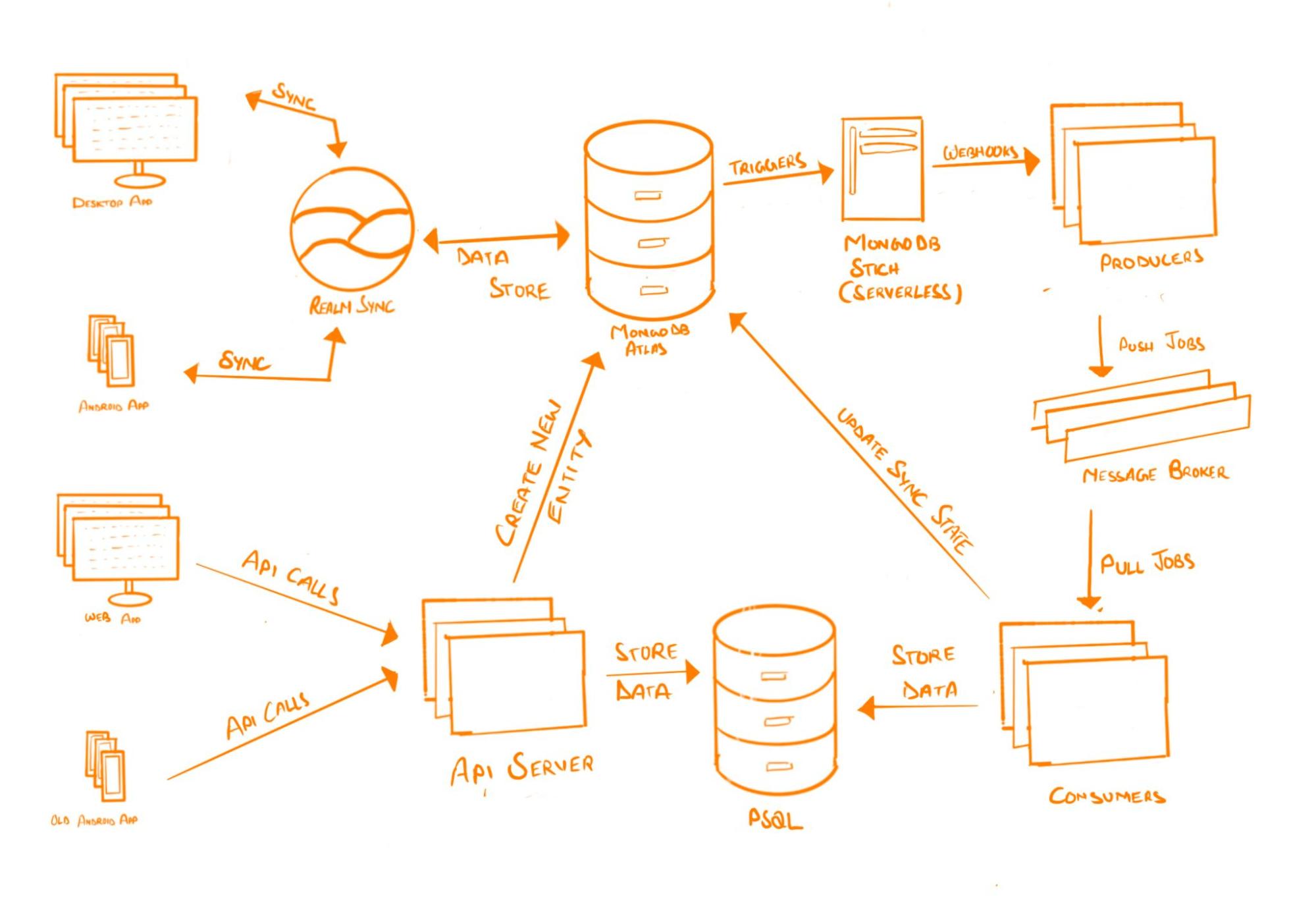
Firstly, connectivity. According to co-founder and CTO Rakesh Yadav, while India has the world’s second largest internet penetration, many businesses struggled with fluctuations in internet services, outages and latency which made it imperative to develop tools that could manage billing and inventory in both online and offline environments. It was also vital they could sync seamlessly in the background to ensure the accuracy of data when they came back online. This gets particularly complex when multiple people from a company may be all using the app simultaneously while going online and offline. If there is not a sophisticated process for syncing and resolving conflicts (e.g. two invoices submitted with the same invoice number or edits made to the same section of a document) then there's a high chance that a customer's data or work could get lost.
The second challenge was data security. “When customers approached us to learn more about myBillBook, one of their critical questions is always wanting to know how secure the data is. They needed their data to be available 100 percent of the time online and offline, and with certainty that there was no chance their data might leak out to third parties or be compromised in any way,” Rakesh explained.

_1.svg)