“Companies of all sizes have greatly improved their distribution processes, but still lack real-time visibility into their warehouse operations,” explained Wakefield. “Visibility has existed in the transportation part of the supply chain for a long time. It’s typically much easier to accomplish, because the data sets are much smaller as compared to the multitude of transactions that take place in the warehouse. Warehouse operations teams need the same level of detail to mitigate the risks associated with a lack of real-time visibility into operations and labor. ”
Longbow needed to enable real-time warehouse visibility and reporting at the heart of Rebus, and it knew it could not rely on monolithic, time-consuming spreadsheets to do so. It became clear that the document database model was a good match and would allow Rebus to gather, store, and build visibility into disparate data in near real-time. Longbow then needed to find the right document database partner.
“When we first came up with the idea for Rebus, we gathered a group of employees to brainstorm the best way to build it, and one of our employees suggested we use MongoDB as the underlying datastore,” said Wakefield. “We were comfortable with the MongoDB ecosystem, the technology, and the selection of tools.”
“Our team has extensive database experience, but felt the time put into the day-to-day management of the database could be put to better use. We knew we needed to keep our focus on building the product, not managing our databases. Backups were becoming a very serious concern. The backup scripts we were running were community-built, unsupported, and needed to be modified for our use case,” said Brady. “We spent a lot of time verifying backups, re-running failed backups, and modifying our backup scripts. We knew the expectation from our customers would be nearly zero data loss and we had no point-in-time recovery. MongoDB Atlas allowed us to solve these issues almost instantly.”
“Our application is SOC II Type 2 compliant,” added Brady. This compliance focuses largely on security, processing, and storing data for customers. "If we’re going to go down the DBaaS road, it had to be with a provider that was also SOC II Type 2 compliant. MongoDB Atlas met this requirement for us."
THE SOLUTION
Rebus, built on MongoDB and running on Google Cloud
“In the early stages of building Rebus, we made the decision to leverage Google Cloud (GC) for IaaS. We chose GC because of its ease of use, performance, and price. When deciding to move our MongoDB clusters from self-managed GC VMs to a DBaaS platform, MongoDB Atlas was a natural fit because of the ability to deploy clusters on GC infrastructure,” said Brady. “Performance, and overall understanding of the underlying cloud infrastructure, were our main reasons for deploying our MongoDB Atlas clusters on Google Cloud.”
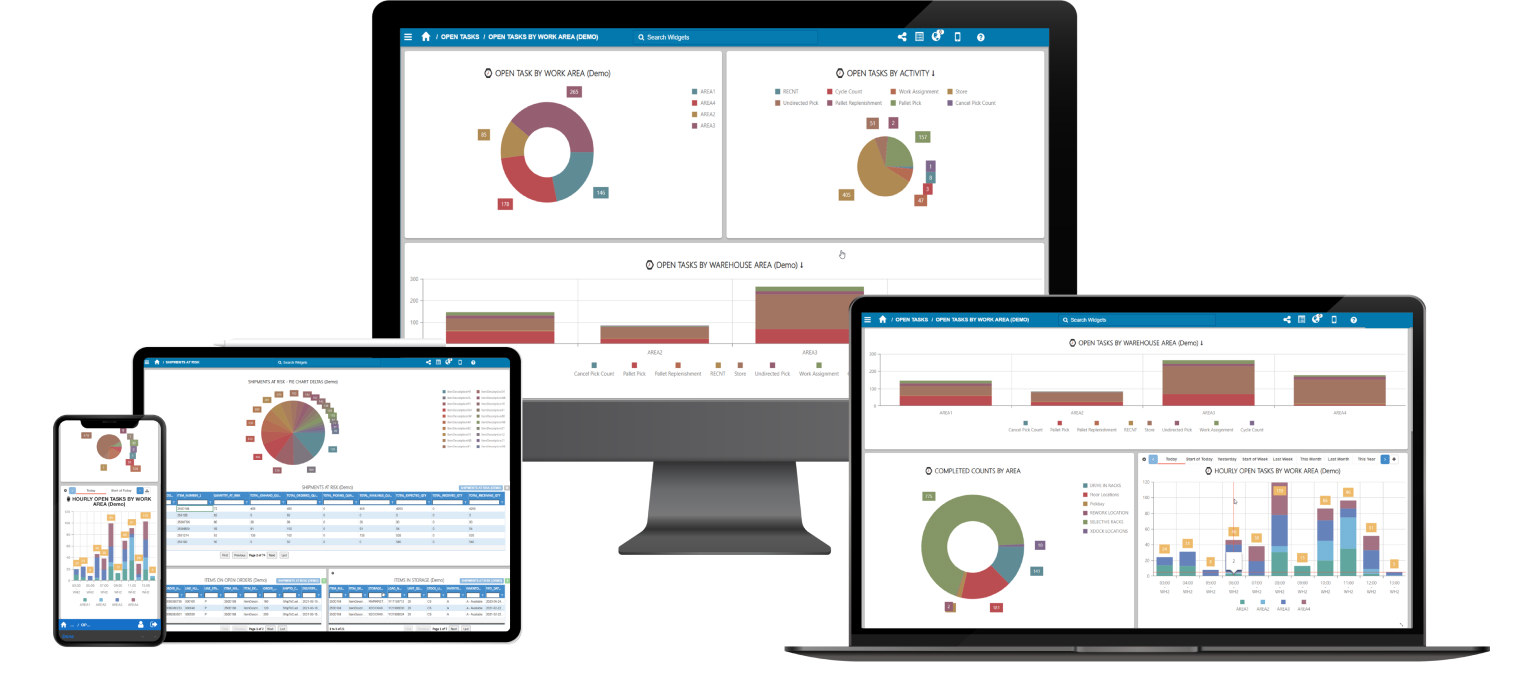
MongoDB Atlas sits at the heart of Rebus, shown in Figure 1, enabling it to harness the power of smart data and offer real-time visibility into warehouse operations. That means ingesting data in many formats from a wide range of systems, storing it for efficient access, and presenting it as needed to users — at scale. Now, customers, including KraftHeinz, Mars, Alcon Labs, Subaru, and others enjoy access to critical information that enables visibility and smarter decision making across the warehouse like never before.



_1.svg)