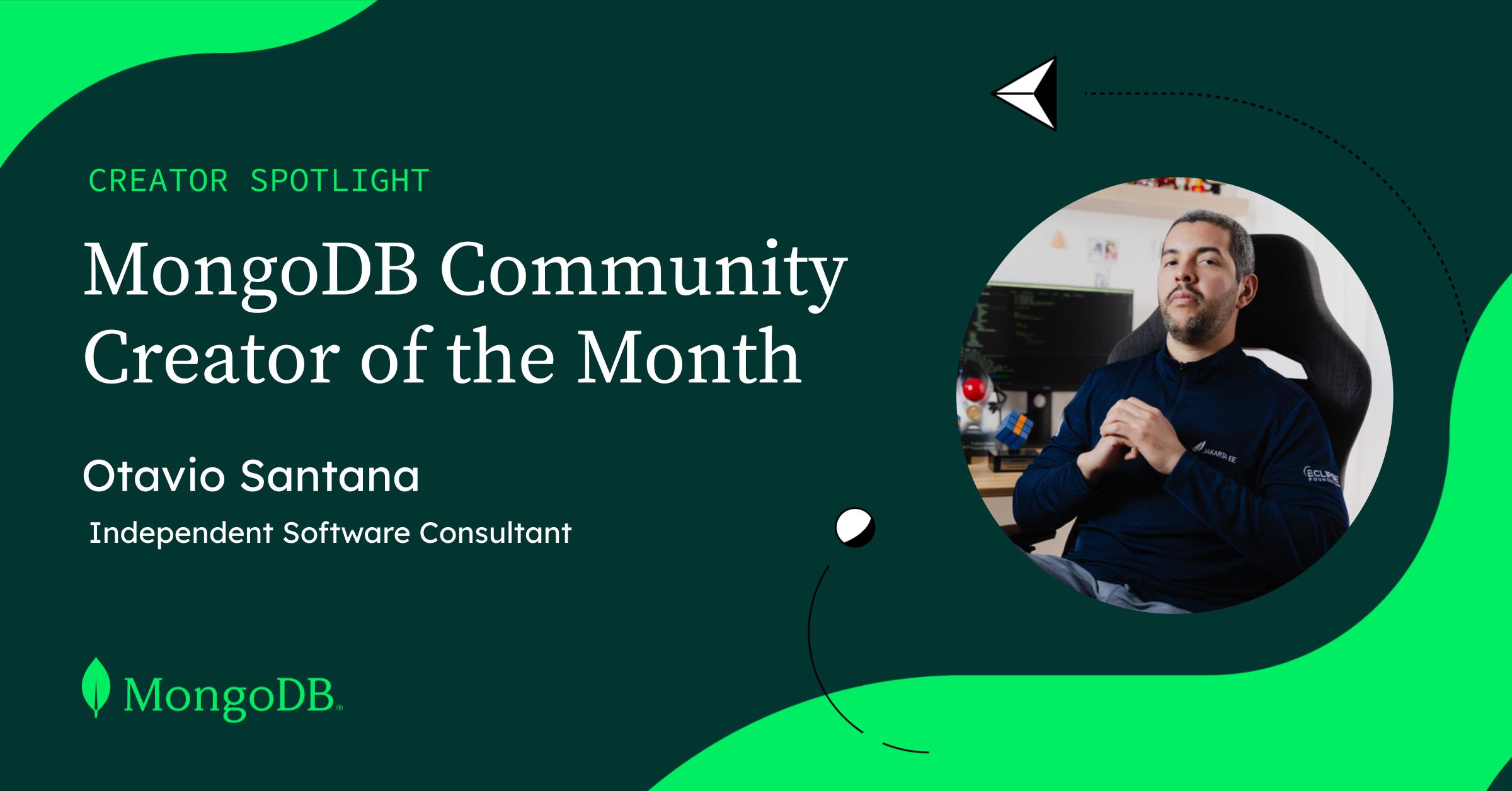
Introducing @Otavio_Santana , our MongoDB Creator of the Month! He is an independent software consultant and a passionate educator who has made MongoDB concepts accessible to developers through his content, including Introduction to MongoDB and Helidon, among many others!
We did a Q&A with Otavio about his journey, so keep reading to learn more about him👇
Why did you start creating and sharing technical content?
I started creating technical content for two main reasons. First, to give back to the open-source community. My career was built on knowledge freely shared by others, and contributing content is my way of expressing gratitude and supporting the next generation of engineers. Second, teaching is one of the most effective ways to learn. When you explain a concept, you are forced to structure your thoughts clearly, challenge your assumptions, and deepen your understanding. This creates a virtuous cycle: you grow technically while helping others grow, turning knowledge-sharing into a mutually beneficial, continuous learning process.
Take us behind the scenes of your creative workflow
My workflow starts with curiosity. I usually pick a topic I want to understand more deeply, then define a clear learning goal. From there, I split the work into two parts: concepts and practical application. I study the theory until I can explain it simply, then validate it through a hands-on example. Writing comes after clarity, not before. I focus on making ideas accessible rather than exhaustive. My advice is to start small, prioritize clarity over complexity, and always include practical examples. Consistency matters more than perfection—publishing regularly builds both confidence and skill over time.
What is your favorite content that you’ve created so far?
My favorite content is the one that helps senior and staff engineers design scalable systems using MongoDB within real-world architectures. Many resources focus on basics, but enterprise challenges are different—data modeling, integration with frameworks, and aligning design with NoSQL principles are often misunderstood. I focus on bridging that gap, especially in Java ecosystems. For example, I explore how MongoDB aligns with design patterns, testing strategies such as BDD, and modern architectural approaches. What makes this content meaningful is seeing experienced engineers rethink assumptions and apply MongoDB more effectively, which directly impacts system quality and long-term scalability.
If you could share one piece of advice to someone who wanted to start creating technical content, what would that be?
Software engineering is not just about writing code—it is about communicating ideas. If you want long-term impact, especially in roles like staff engineer or architect, you must learn how to express complex concepts clearly. Creating content is one of the best ways to develop this skill. It also strengthens your personal brand, making your work visible and building trust within the community. My advice is simple: start before you feel ready, focus on clarity, and share what you are learning. Over time, this practice not only improves your communication but also opens doors to new opportunities, collaborations, and career growth.
Where can developers connect with or learn more about you?
Want to catch Otavio at an upcoming event or connect with him? Reach him via LinkedIn, Twitter/X, Blog, or GitHub.
Thank you very much, Otavio, for sharing your story with us today and for all the incredible content you’ve created about MongoDB. We can’t wait to see the next content you publish.
