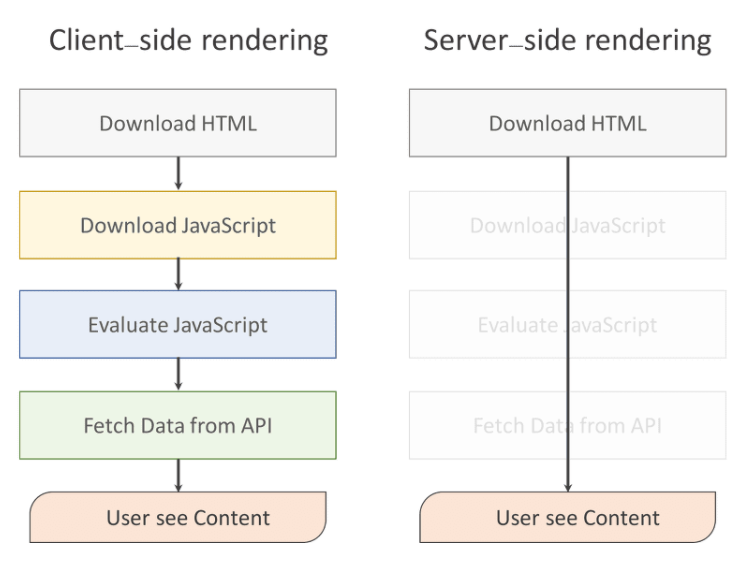
Day 12/100 of 100daysofcode : Mastering Server-Side Rendering (SSR) vs. Client-Side Rendering (CSR)!

Today, I not only explored Server-Side Rendering (SSR) but also dove into how it compares to Client-Side Rendering (CSR) and when to use each in web development.
 Here’s what I learned:
 SSR is perfect for improving initial load times and boosting SEO. Since the server renders the content, users can see meaningful content right away—super important for content-heavy and public-facing websites.
CSR, on the other hand, shines for highly interactive apps. It allows for faster subsequent loads and works great in apps where user interaction is the focus, like dashboards or single-page applications.
 When to use SSR vs. CSR?
SSR is ideal for SEO-friendly pages or static sites, and is commonly used in frameworks like Node.js, Next.js, ASP.NET and PHP(Laravel).
CSR fits apps with heavy front-end interactions and is often seen in frameworks like React, Angular and Vue.
Learning how to balance SSR and CSR in different scenarios has opened up new possibilities for optimizing performance in my future projects. The trick is knowing when to apply each rendering method for the best user experience!
How do you approach SSR vs CSR in your projects?