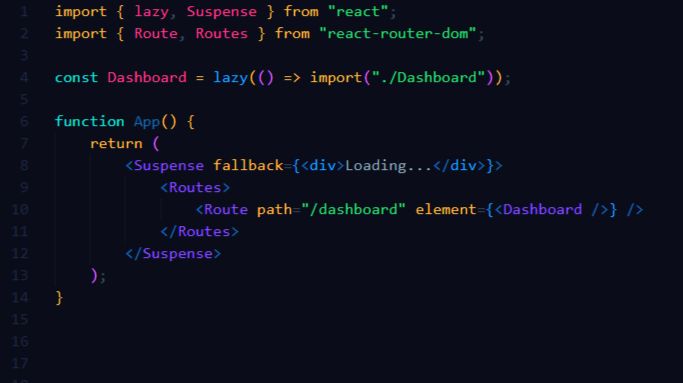
𝐃𝐚𝐲 𝟖𝟖 of #100DaysOfCode
- 𝑪𝒐𝒅𝒆 𝑺𝒑𝒍𝒊𝒕𝒕𝒊𝒏𝒈 𝒘𝒊𝒕𝒉 𝑹𝒆𝒂𝒄𝒕 𝑹𝒐𝒖𝒕𝒆𝒓 𝑫𝑶𝑴 𝒇𝒐𝒓 𝑭𝒂𝒔𝒕𝒆𝒓 𝑳𝒐𝒂𝒅 𝑻𝒊𝒎𝒆𝒔 -
As your app grows, you’ll likely notice slower initial load times. This happens because all of your components are loaded at once, even if the user doesn’t need them immediately. 𝐂𝐨𝐝𝐞 𝐬𝐩𝐥𝐢𝐭𝐭𝐢𝐧𝐠 allows you to load parts of your app dynamically, improving performance by reducing the bundle size.
React Router DOM supports code splitting through dynamic imports (using 𝐥𝐚𝐳𝐲() and 𝐒𝐮𝐬𝐩𝐞𝐧𝐬𝐞). This technique ensures that only the code needed for the current route is loaded, reducing initial load times and improving performance.
→ 𝐖𝐡𝐲: It keeps your app responsive by only loading code when it’s needed.
→ 𝐖𝐡𝐞𝐧: Use it when your app has large, less frequently used components (e.g., admin panels, detailed reports, or any feature-heavy routes). This is especially useful in Single Page Applications (SPAs), where users might not need all routes loaded upfront.